RSS

Category Archives: Public School

An Op-Ed piece by Hannah Portner on California’s Smarter Balanced Tests—one student’s point of view

Guest Post by HannaH Portner who blogs at Project Rainbow

On Friday they told us that we were going to be having Common Core tests next week (SBAC or Smarter balanced tests in CA) .

  • “Make sure to check your room number by the counseling office.”
  • “Review the practice exam.”
  • “Get enough sleep.”
  • But, for what?
  • What even is this test?
  • Why is it so important?
  • Where is all this information going?
  • Why was I not told by any member of the staff that I could opt out?

There was a letter posted outside the office. It said that anyone could opt out of these tests with parent permission. It said that we as students have a voice. We have rights. That got me curious. I started asking questions. I asked members of my neighborhood their opinions. I asked family, friends, teachers, and searched the internet about these tests. I wanted to share what I learned. I wanted to have a voice, not just be a number from a test.

I heard stories of kids not wanting to go to school because they were so deflated, so stressed and confused. I read about how much time test prep takes. I talked with my friend Suzy who is a 7th grade English and history teacher about how useless some of this data mining seems. “ We have to do 3 [in class essays] every year. I have to grade all of these, put them in the gradebook, give feedback, then input them into a district website to collect data. One extra step for teachers is awful. Why do we do this? What is done with this data? The district has no answer. I calculated that every year, in addition to all other curriculum requirements, we have to score 450 essays per teacher.”

Schools are having precious learning time taken away to administer standardized tests. The Huffington Post states: “Teachers now devote 30 percent of their work time on testing-related tasks, including preparing students, proctoring, and reviewing the results of standardized tests, the National Education Association says.” Not only is time drained, but money is being used to buy computers to administer these tests.

In Suzy’s case, she has to prep students for this one test but won’t necessarily know where the data is going or how it will be used. Last year we took practice tests and some questions were so hard I clicked random answers. I even wrote a poem about how I felt like a robot. I never got my score back. I wonder what would have happened if I wrote “ WHAT IS THE POINT” for an essay question.

Since I don’t see my results, or the specific questions I got wrong, I don’t understand what I could do better or worse on. In addition, we haven’t been provided specific test information, or easy access to reasons why we are taking this test. For example my math teacher told me that our test will be a practice for a later SBAC test. We aren’t even taking the real thing. She told me that the teachers will grade them and it will be good finals prep. I would be taking a practice exam for the test I would take that is actually a test prep for finals? That is a lot of prep.

It’s relatively easy to administer a test then judge students based on their scores. I think part of the problem is that when people fail these tests, their self esteem drops, they think they aren’t good enough, and then they cry when they get home from school. On many occasions I have come from school frustrated and broken out into tears, and I am an honor student in a really privileged area. Imagine what it’s like for our neighbors who don’t have free tutoring and get Ds and think it is all their fault. A test score is such a small part of a person’s intelligence. When these test are being taken, the institutions are saying that the test is what measures how smart a person is, or how good a school is. That is a whole lot of unnecessary pressure.

In addition if these tests are being given to school with low performance ratings and the tests are really difficult, some of these schools may not have the resources to provide test prep or extra help to their students and because they are underfunded, the students, teachers, and schools suffer the consequences.

To an extent, I agree that tests are necessary. People are certified to become nurses and plumbers and teachers by taking a test. But to test on how well a school or student is doing with one test is ridiculous. If you wanted the whole picture then someone could collect my GPA which has my average test scores. You could look at my extra curricular activities, and then asses the school based on multiple variables. But that would probably take too long.

I agree that the new common core method of teaching is pretty rad. I like having explorations in math. It makes me question and have opinions. I like that. I do not like the immense data collection and loads of testing. There is a limit to all of this stress, confusion, and frustration, and that is what we as a community have to figure out and act upon so that education can be fun, and full of wonder like it should be.

See more:
Race to Nowhere
Huffington Post
United Opt Out

_______________________

Lloyd Lofthouse, the host of this blog, is a former U.S. Marine and Vietnam Veteran,
who taught in the public schools for thirty years (1975 – 2005).

Crazy is Normal promotional image with blurbs

Lofthouse’s first novel was the award winning historical fiction My Splendid Concubine [3rd edition]. His second novel was the award winning thriller Running with the Enemy. His short story A Night at the “Well of Purity” was named a finalist of the 2007 Chicago Literary Awards. His wife is Anchee Min, the international, best-selling, award winning author of Red Azalea, a New York Times Notable Book of the Year (1992).

To follow this Blog via E-mail see upper right-hand column and click on “Sign me up!”

 

Tags: , , , , , ,

The Alleged Public School Monopoly and the Fraudulent Civil Rights Movement of our Time

It is highly arguable with evidence and data that the corporate education reform movement mostly funded by a handful of billionaire oligarchs is driven by endless oxymorons. For instance, the oxymoron of a movement that claims it’s the Civil Right Movement of our time while Corporate Charters practice segregation on a grand scale (click the link to learn more), and the other major oxymoron alleges the public schools are a monopoly that must be destroyed.

For instance, in New York State, Governor Cuomo (The Crook) characterized public education as a ‘monopoly’ that he vowed to break. For the rest of this post, I will focus on Governor Cuomo’s claim that the public schools are a ‘monopoly’ that must be broken.

First, the public schools are supported by taxes paid by the public, and they are non-profit, transparent and held accountable through that transparency. In addition, they are governed by democratic values—except where reformers like Cuomo the Crook have used their executive power to hijack entire school districts and remove the democratically elected school boards. Because of the transparency and democratic nature of these schools, every public dollar spent is tracked to make sure it was spent to support the education of children.

A monopoly by definition, would be John D. Rockefeller’s Standard Oil, and his Standard Oil (with an emphasis on his) incorporated oil producing, transporting, refining, and marketing into one single behemoth which grew both vertically and horizontally (he bought the producers and distributors). In 1882, all of Standard Oil’s properties were merged into the Standard Oil Trust, and by the end of the decade (1890), it controlled 88% of the refined oil flows in the United States.

To be clear: John D. Rockefeller was ONE man who controlled 88% of the refined oil that flowed in the United States, and he answered to no one until President Teddy Roosevelt went after his monopoly to break it up.

How does that compare to the corporate education reform movement’s claim that public education is a monopoly that must be broken?

Even though the Obama Administration—with help from, for instance, mostly Bill Gates in addition to the Walton family, Eli Broad and a squad of other powerful private sector corporate oligarchs—did all they could to make Arne Duncan the John D. Rockefeller of the alleged public education monopoly, when we sweep away all the lies and allegations, what’s left is almost 14,000 individual public school districts. Most of these school districts are managed by their own democratically elected school boards and each district has its own CEO who often comes with the title of superintendent, who is hired and can be fired by those elected school boards. Those superintendents answer to the elected school boards and nothing can be hidden because of the transparency, and through that transparency every state and territory in the United States watches over those almost 14,000 public school districts to make sure they are not breaking any laws or legislation that applies to public education.

If you’re interested, you might want to read:

When that alleged public school monopoly is broken as Cuomo has pledged, what is already taking its place?

The answer: opaque, often fraudulent, often worse or the same as the public schools they are replacing, segregated, private sector, for-profit corporate charter schools that are not democratic and not answerable to the laws of each state that are meant for the public schools (even when a corporate charter claims to be non-profit, when we follow the money, it almost always flows like fast moving sewage to a private sector, for-profit corporation.)

For a sampling of this fraud, I suggest you read the following:

Release: “A new report released today reveals that fraudulent charter operators in 15 states are responsible for losing, misusing or wasting over $100 million in taxpayer money.”

One last thought—while no one can buy the public schools and create a private sector monopoly like Standard Oil once was under John D. Rockefeller, one oligarch—for instance, Bill Gates, Eli Broad or the Walmart Walton family—will be in a position to do just that once the public schools are gone and have been replaced by corporate charters that can go bankrupt and close or be merged and/ or sold on a daily basis.

_______________________

Lloyd Lofthouse is a former U.S. Marine and Vietnam Veteran,
who taught in the public schools for thirty years (1975 – 2005).

Crazy is Normal promotional image with blurbs

Lofthouse’s first novel was the award winning historical fiction My Splendid Concubine [3rd edition]. His second novel was the award winning thriller Running with the Enemy. His short story A Night at the “Well of Purity” was named a finalist of the 2007 Chicago Literary Awards. His wife is Anchee Min, the international, best-selling, award winning author of Red Azalea, a New York Times Notable Book of the Year (1992).

To follow this Blog via E-mail see upper right-hand column and click on “Sign me up!”

 

Tags: , , ,

Proof that any fool can get elected, and that public school teachers should really be running the United States

This post will compare the qualifications it takes to become a public school teacher to what it takes to qualify to run for a political state or national office and end up in the White House as president or a member of the U.S. Congress.

TEACHERS

Kindergarten and elementary school teachers must have at least a bachelor’s degree. In addition, public school teachers must have a state-issued certification or license.

The 2011–12 Schools and Staffing Survey: First Look

In 2011-12, on average, both public and private school teachers had about 14 years of experience. On average, teachers in traditional public schools had more teaching experience (14 years) than teachers in public charter schools (9 years).

The percentage of public school teachers with a master’s degree as their highest degree was larger in traditional public schools (48 percent) than in public charter schools (37 percent) and private schools (36 percent).

“As a group, teachers score relatively high in prose, document, and quantitative literacy; there are no significant differences in scores between male and female teachers or between elementary and secondary teachers. About half of teachers score at Levels 4 and 5 (the two highest levels) on the three literacy scales, compared to about 20 percent of other adults nationwide. … The NALS data present teachers as a labor market bargain, comparing favorably with other professionals in their literacy skills, yet earning less. And we need to recognize that we pay teachers considerably less than other professionals with comparable capacities for dealing with prose, document, and quantitative literacy tasks.” – ets.org

ELECTED REPRESENTATIVES

As you read this section, you might notice that there are no literacy or education requirements to run for a public office. It’s possible to be a high school dropout and be illiterate and become President, a state governor or a member of the U.S. Congress.

In the United States, a person must be at least 35 to be President or Vice President, 30 to be a Senator, or 25 to be a Representative, as specified in the U.S. Constitution. Most states in the U.S. also have age requirements for the offices of Governor, State Senator, and State Representative. Some states have a minimum age requirement to hold any elected office (usually 21 or 18).

How Elected Officials Scored On American Civics Literacy

In each of the following areas, for example, officeholders do more poorly than non-officeholders:

  • 79% of those who have been elected to government office do not know the Bill of Rights expressly prohibits establishing an official religion for the U.S.
  • 30% do not know that “life, liberty, and the pursuit of happiness” are the inalienable rights referred to in the Declaration of Independence.
  • 27% cannot name even one right or freedom guaranteed by the First Amendment.
  • 43% do not know what the Electoral College does. One in five thinks it either “trains those aspiring for higher political office” or “was established to supervise the first televised presidential debates.”
  • 54% do not know the Constitution gives Congress the power to declare war. 39% think that power belongs to the president, and 10% think it belongs to the Joint Chiefs of Staff.
  • Only 32% can properly define the free enterprise system, and only 41% can identify business profit as “revenue minus expenses.” – Fellowship of the Minds.com

And in the education wars, who is telling whom how to do their job?

_______________________

Lloyd Lofthouse is a former U.S. Marine and Vietnam Veteran, with a BA in journalism and an MFA in writing,
who taught in the public schools for thirty years (1975 – 2005).

Graphic OCT 2015

Where to Buy

To follow this Blog via E-mail see upper right-hand column and click on “Sign me up!”


Tags: , , , , ,

Saving Public Education and Democracy—teachers, parents and children, you are not alone

Do not let Corporate Education Reformers like Michelle Rhee, David Coleman, Bill Gates, the Walton family and Arne Duncan eat our children for a profit. The resistance to save the transparent, nonprofit, democratic public schools in the United States survives, thrives and grows daily. And regardless of what you might hear in the media, the teachers’ unions did not start this movement or fund it.

1: The movement started in earnest with Diane Ravitch (find her blog here). She was appointed to public office by Presidents George H. W. Bush and Bill Clinton. She served as Assistant Secretary of Education under Secretary of Education Lamar Alexander from 1991 to 1993 and his successor Richard Riley appointed her to serve as a member of the National Assessment Governing Board, which supervises the National Assessment of Educational Progress; she was a member of NAGB from 1997 to 2004. From 1995 to 2005 she held the Brown Chair in Education Studies at the Brookings Institute.

2: The National Center for Fair & Open Testing (FairTest) works to end the misuses and flaws of standardized testing and to ensure that evaluation of students, teachers and schools is fair, open, valid and educationally beneficial.

3: United Opt Out: The Movement to End Corporate Education Reform—The central mission of United Opt Out is to eliminate the threat of high-stakes testing in public K-12 education. We believe that high-stakes testing is destructive to children, educators, communities, the quality of instruction in classrooms, equity in schooling, and the fundamental democratic principles on which this country is based.

4Badass Teachers Association: We are a community of teachers, professors, and educators running from Kindergarten all the way to University. We are also parents, your neighbors, and your friends. We are members of your community, and we care deeply about that community. We have come together to push back against so-called corporate education reform, or the Educational-Industrial Complex and the damage it has done to students, schools, teachers, and communities.

5: The first national conference of the Network for Public Education (NPE) was held at The University of Texas at Austin on March 1 and 2 in 2014, and about 400 people attended. About 600 people attended the second annual conference of the NPE held in Chicago on April 25 and 26, 2015.

6: Momma Bears: Someone jokingly called one of us a “Momma Bear” for having the courage to stand up against politicians to defend our children’s public schools. We realized that’s what we were!  Since then, we’ve met many other people who didn’t realize they were Momma Bears, but they are.

Momma Bears defend and support children and public schools.  Momma Bears realize that quality public education is a right for every child.  There are greedy corporations and politicians eager to destroy and profit from our American public school system and vulnerable children.  Momma Bears are united in defending and protecting our young and their future from these threats.

7. USAS: Public education is under attack.Corporate-backed behemoths like the Walton (Walmart) and Fisher (Gap Inc) foundations are pouring millions into manufacturing a new pro-corporate education reform consensus on our campuses, propping up groups like Teach for AmericaStudents for Education Reform, and countless sponsored academic research programs. Their goal? To privatize our public education system, turning over a major public good into private hands, in the process smashing the only organized force that has dared to stand up to them: teachers’ unions.

United Students Against Sweatshops (USAS) is a grassroots organization run entirely by youth and students. We develop youth leadership and run strategic student-labor solidarity campaigns with the goal of building sustainable power for working people. We define “sweatshop” broadly and consider all struggles against the daily abuses of the global economic system to be a struggle against sweatshops.

8: EduBloggers: The Education Bloggers Network is an informal confederation of more than 200 education reporters, advocacy journalists, investigative bloggers, and commentators.  Members of the Education Bloggers Network are dedicated to providing parents, teachers, public education advocates and the public with the truth about public education in the United States and the efforts of the corporate education reform industry.

9: Students Against Testing: Students Against Testing was created to be a strong force against the score-obsessed education machine known as standardized testing. At the same time, SAT also exists as an advocate for bringing positive, creative and real-life learning activities into the schools. SAT believes that for the reasons stated below urgent action from the student body itself is the most direct way to counteract the boredom and petty competition that currently plagues the schools.

10. Parents Across America (PAA): Parents Across America is committed to bringing the voice of public school parents – and common sense – to local, state and national debates.

PAA was founded by a group of parents active in their communities who recognized the need to collaborate for positive change rather than remain isolated in local battles. Since the top-down forces that are imposing their will on our schools have become national in scope, we need to be as well.

_______________________

Lloyd Lofthouse is a former U.S. Marine and Vietnam Veteran,
who taught in the public schools for thirty years (1975 – 2005).

Crazy is Normal promotional image with blurbs

Lofthouse’s first novel was the award winning historical fiction My Splendid Concubine [3rd edition]. His second novel was the award winning thriller Running with the Enemy. His short story A Night at the “Well of Purity” was named a finalist of the 2007 Chicago Literary Awards. His wife is Anchee Min, the international, best-selling, award winning author of Red Azalea, a New York Times Notable Book of the Year (1992).

To follow this Blog via E-mail see upper right-hand column and click on “Sign me up!”

 

Tags: , , , , , , , , , , ,

The Cannibalization of General Education—Guest Post

Before I address the topic of Integrated Collaborative Teaching (ICT), which is the combining of special education and general education students in the same class, I want to thank Mr. Lofthouse for publishing my anonymous guest post on his Crazy Normal blog.  I have read many of Mr. Lofthouse’s blog posts that covered charter schools, Common Core curriculum and other pertinent educational issues, and I appreciate Mr. Lofthouse creating his Crazynormal blog so that teachers can educate the public.

Before I address Integrated Collaborative Classrooms (ICT), here is a brief bio about me.  I am currently teaching at a comprehensive high school in California, and I have been teaching for 26 years.  The reason why I am publishing this post anonymously has to do with the often hostile and combative environment that our public schools have become as reformers attempt to silence teachers through fear of losing their jobs.

Returning to the issue of ICT classrooms: ICT has become a highly charged educational issue.  With Special Education cannibalizing the budgets of school districts, ICT classes seem like a true knight in shining armor for financially strapped school districts.

Why do school districts across the nation need a financial knight in shining armor? They are being bled dry financially.  Unscrupulous advocates and lawyers, who are lining their own pockets, are helping parents obtain expensive accommodations for their special education children. For example, “One southern California school district pays for a severely brain-damaged boy to attend a specialized school in Massachusetts, and to fly his parents and sister out for regular visits, at an annual cost of roughly $254,000.  The superintendent only balked when the family demanded extra visits for the boy’s sister” (Worth).  In the Gilroy Unified School District, district spokesperson Deborah Toups explained how her district’s unfunded annual special education costs rose from $170,000 in 2002 to $3,200,000 in 2010 (Melendez).


The special education teacher in the video makes valid points about how the old Special Education model was ineffective.  However, full inclusion is not the answer either.

  • Special education students can be successfully included in physical education, art and music classes, but it is more difficult to include them in core academic subjects, such as English, Math, or Science.
  • The special education teacher also talked about how she could “jump in” and assist with a lesson, but most of the time this does not occur at the high school level because most special education teachers are not trained in a core subject.  Hence, they are not able to co-teach a Geometry lesson, a lesson over rhetoric in English, etc.
  • What tends to happen is the special education teacher ends up sitting in the back of the classroom and observes the lesson or assists individual students.
  • A final point made in the video was co-teaching takes a lot of time. In addition, most general education teachers do not share a common prep period with their special education counterpart; hence, planning does not occur.

In 1975, the Federal government promised it would fund 40% of special education costs, but the current reality is the Feds cover only 10% (Worth).  The states do not make up the difference, so school districts have to rob their other programs to pay for special education.  In addition, a recent ABC news report stated that the increase in the number of lawsuits has grown substantially due to the parents of autistic children (Shah).  School districts are not fully addressing the accommodations for autistic children because “… scientists and researchers and families still have a lot to learn about [autism]” (Shah).  Autism is a complex neurological disorder, and there is still yet a lot to be learned about it.  Unfortunately, school districts are unrealistically expected to have complete knowledge about how to meet the needs of their autistic children.  It doesn’t help that the spike in the number of autistic children has been dramatic.  In 1990, nine in 10,000 kids were diagnosed with autism; in 2000, forty-four in 10,000 were diagnosed (Melendez).  School districts know that their spending for special education is going to increase due to the spike in the number of autistic children.

Hence, Integrated Collaborative Teaching.  ICT classrooms utilize two teachers:  a general education teacher and a special education teacher.  ICT classrooms can place up to 12 special education students in an ICT classroom.  Theoretically, special education and general education teachers are supposed to plan their lessons together, examine pre and post testing data of their students, discuss student behavior, plan for IEP meetings, work out differences in teaching style, etc.  On paper, ICT classrooms represent a knight in shining armor for school districts.  Special education students are being mainstreamed and school districts are also saving money, because they do not have to hire as many special education teachers due to general education teachers becoming de facto special education teachers.

Unfortunately, many ICT classrooms are not serving the needs of their general education students.  In fact, most ICT teachers report that they don’t share a common planning period.  Hence, special education teachers and general education teachers are not able to plan lessons together, coordinate disciplinary actions, examine testing data, etc.  The most negative outcome of ICT classrooms is that the course pacing slows dramatically.  General education teachers have to spend more time over discipline issues stemming from the special education students, which hurts the overall learning environment.  Moreover, many general education teachers report that they neglect their general education students because they are hyper- focused on their special education students.  Many times special education teachers are not in the classroom because they are attending IEP meetings for other special education students on their caseload.  Also, many school districts only have their special education teacher in the ICT classroom two to three times a week. That leaves the general education teachers with 30-plus students of which 12 are Special Ed.

What school districts must do is to legally challenge excessive IEP accommodations that they are being forced to implement.  Currently, the legal teams of special education parents represent the A-team.  Most school districts do not have A-team type lawyers, so they cave into the unreasonable requests that some special education parents demand.  Also, school districts need to come together and sue the Federal government.  When the Supreme Court ruled that special education students were to have their academic needs met, the Federal government promised that it would cover 40% of the costs (Worth).  School districts must force the Federal government to cover the 30% that it’s not paying.

The costs for special education can be reeled in; however, school districts across the nation are going to have to work together to challenge excessive IEP accommodations and also force the Federal government to honor its financial obligations.

More information on this latest fad in public education comes from: Canadian Teachers’ Associations and the Inclusive Movement for Students with Special Neds

“This study shows that when inclusive schooling for students with special needs appeared on the education reform horizon in the mid-1980s, Canadian teachers’ associations were wary and unconvinced.

“In general, they viewed the concepts and implementation as replete with unsustainable assumptions and prescriptions – an imposed government initiative that severely compromised the working conditions of their members. They undertook penetrating, comprehensive, and extensive data collection that examined the impact of inclusive schooling and provided feedback on the conditions of learning and teaching.

“Common views criticized governments for not offering systematic support for schools as they attempted to implement inclusive policies and chided that the process was often effected without systematic modification to a school‘s organization, due regard to teachers‘ instructional expertise, or any guarantee of continuing resource provision.”

Works Cited

Melendez, Lyanne. “Special Ed Students Could Bankrupt Districts.” abc7news.com. 12 Nov. 2010. Web. 11 April 2015.

Shah, Nirvi. “Do Parents of Children With Autism File More Lawsuits?” edweek.org. 21 Nov. 2011. Web. 11 April 2015.

Worth, Robert. “The Scandal of Special-Ed.” washingtonmonthly.com. June 1999. Web. 11 April 2015.

_______________________

Lloyd Lofthouse is a former U.S. Marine and Vietnam Veteran,
who taught in the public schools for thirty years (1975 – 2005).

Crazy is Normal promotional image with blurbs

Lofthouse’s first novel was the award winning historical fiction My Splendid Concubine [3rd edition]. His second novel was the award winning thriller Running with the Enemy. His short story A Night at the “Well of Purity” was named a finalist of the 2007 Chicago Literary Awards. His wife is Anchee Min, the international, best-selling, award winning author of Red Azalea, a New York Times Notable Book of the Year (1992).

To follow this Blog via E-mail see upper right-hand column and click on “Sign me up!”

 

Tags: , , , , , ,

The Oxymoron of Corporate Education Reform Exposed by the Results of the International PISA Test

The foundation of the U.S. corporate education reform movement is built on a house of cards that alleges there are too many incompetent teachers in America’s public schools, and that using standardized high stakes test to rank teachers based on student test scores will reveal who those teachers are.

But today the corporate education reformers have unwittingly provided evidence that they are totally wrong with the same data they want to use to root out these alleged incompetent teachers and then also close public schools with the worst scores.

“New York State education officials released data showing that the top-rated teachers, based on student test scores, are less likely to work in schools enrolling black and Hispanic students.” NY State Released Junk Science Ratings by Diane Ravitch

Why are the corporate education reformers wrong?

Stanford.edu reports, “There is an achievement gap between more and less disadvantaged students in every country; surprisingly, that gap is smaller in the United States than in similar post-industrial countries, and not much larger than in the very highest scoring countries.”

If the alleged claims of the corporate education reformers were correct, that means—according to the results of the international PISA tests—teachers who work with disadvantaged students in every country are also incompetent and should lose their jobs.

But … here’s the twist: “Achievement of U.S. disadvantaged students has been rising rapidly over time, while achievement of disadvantaged students in countries to which the United States is frequently unfavorably compared – Canada, Finland and Korea, for example – has been falling rapidly.”Stanford.edu

This tells us that the alleged incompetent teachers in the U.S.—who work with the most disadvantaged students—are the most competent (incompetent teachers) in the world.

How can America’s public school teachers be incompetent when the disadvantaged students they work with are outperforming the disadvantaged students in every country PISA tests—even Canada, Finland and Korea? An oxymoron if I’ve ever heard one.

The corporate education reformers have hung themselves with the same noose they intended to put around the necks of public school teachers in the United States.

_______________________

Lloyd Lofthouse is a former U.S. Marine and Vietnam Veteran,
who taught in the public schools for thirty years (1975 – 2005).

Crazy is Normal promotional image with blurbs

Lofthouse’s first novel was the award winning historical fiction My Splendid Concubine [3rd edition]. His second novel was the award winning thriller Running with the Enemy. His short story A Night at the “Well of Purity” was named a finalist of the 2007 Chicago Literary Awards. His wife is Anchee Min, the international, best-selling, award winning author of Red Azalea, a New York Times Notable Book of the Year (1992).

To follow this Blog via E-mail see upper right-hand column and click on “Sign me up!”
 

Tags: , , , , ,

Is it possible that offering support instead of punishment leads to Better Teachers? – Part 2 of 3

View as Single Page

After eliminating China, Liechtenstein and Estonia, from the 2012 International PISA Test ranking, Singapore became #1, Chinese Taipei #2, South Korea #3, Japan #4, Switzerland #5, the Netherlands #6, Finland #7, and Canada #8

1.  Singapore

There are about 25,000 teachers in its primary and secondary schools.

Edutopia.org reports “Teaching is a highly respected and well-compensated profession in Singapore. All teachers are trained at the country’s National Institute of Education (NIE) (one training program).  All new teachers are paired with experienced teachers for mentoring, and peer feedback is built into the schedule. Teachers are entitled to 100 low or no-cost hours of professional development each year. There are approximately 522,000 students attending about 350 schools in Singapore’s education system.

2. Chinese Taipei

There are more than 300 thousand teachers who teach in preschool, primary school, junior high school, and senior high school (teaching about 4 million students). The teachers are trained in universities of education with teacher training programs or centers. These institutions are also responsible for providing in-service training and guidance for local education practitioners.

3. South Korea

Teaching is a highly respected profession in South Korea, and among the most popular career choices for young South Koreans. This is largely due to competitive pay, job stability, and good working conditions – for example, there is a high degree of collaboration among teachers. Elementary teachers must attend one of 13 institutions to become qualified whereas secondary school teachers have multiple pathways into teaching and often attend comprehensive universities. Teachers are paid well in South Korea. Lower secondary teachers can expect a mid-career salary of $52,699, much higher than the OECD average of $41,701. There are about 7 million K-12 students in South Korea.

4. Japan

In Japan, teaching is a respected profession, and teachers have traditionally been paid better than other civil servants. Japan’s average teacher salary for a lower secondary school teacher after 15 years of service (the number that the OECD typically uses for international comparison) is $49,408, as compared to the OECD average of $41,701. The teaching profession in Japan is also highly selective, at both the program admission and the hiring phase. About 14% of applicants are admitted into schools of education, and of those who graduate, only 30-40% find work in public schools. Eric Digests.org reports, “Many Japanese believe that the examination system is too stressful, that the schools are too rigid and don’t meet the needs of individual students, that contemporary students show little interest in studying, and that the educational system needs to produce more creative and flexible citizens for the twenty-first century.”

Stanford.edu says, “In 2002 the Ministry of Education began to implement educational reforms that officials labeled the most significant since the end of World War II. In an attempt to stimulate students to be independent and self-directed learners, one third of the content of the national curriculum was eliminated. Japanese students in grades 3-9 are now required to take Integrated Studies classes in which they and their teachers jointly plan projects, field trips, and other ‘hands-on’ activities. Students in Integrated Studies learn about their local environment, history, and economy. … and teachers are not allowed to give tests on what students have learned.”

5. Switzerland

The goal is to impart adequate knowledge and competence for educating and teaching pupils and students at the various educational levels, as well as children and adolescents with special needs. Teacher education and training is realized within a two-tier model with Bachelor’s and Master’s degree programs.

During the 2008/09 school year there were 1.266 million students in the K-12 Swiss educational system, who were taught by more than 100,000 teachers.

But Susan Ohanian.org reports teachers in Germany, Austria and Switzerland are seeing their school ranked by the Bertelsmann Foundation (using achievement tests) comparing the school of all districts with each other—the teachers are protesting and fighting back. Because compulsory achievement tests are planned in all three countries, they are wary of school rankings that lead to a “senseless competition” among schools.

6. Netherlands

About 2.6 million children attend k-12 (European Agency.org).

In 1917, private and public schools were given equivalent financial status under the Constitution. As a result, the Netherlands is in the unique situation, compared with the rest of the world, of having 70 percent of its schools administered and governed by private school boards. The Constitution thus guarantees “freedom of education”, which embrace the freedom to set up schools, freedom to determine the principles on which they are based (freedom of conviction) and freedom of organization of teaching.

State University.com reports, There is an extensive amount of parental involvement in Dutch schools. … In addition, many schools also have a separate parents’ council or committee.

Teacher training in the Netherlands continues to undergo an overhaul. In 2008, the government, following the recommendations of an advisory council, formulated an action plan to tackle the teacher shortage and improve the position and quality of teachers. Given the high performance of its students and its teacher salaries, which, at $60,174 for a mid-career lower secondary school teacher far outpace the OECD average of $41,701, there is still a teacher shortage in the Netherlands due primarily to the aging teacher workforce.

The 2008 TALIS survey of Dutch teachers revealed that the majority of teachers participate in informal, rather than formal, professional development. This generally takes the form of informal mentorships and conversations, courses and workshops and reading professional literature. … Part of the government’s action plan is the creation of a stronger professional organization for teachers that will be able to evaluate teachers and provide teacher training grants.

7. Finland

There are 596,000 children in the k-12 compulsory education system. There are only 24 private comprehensive schools in Finland (0.5%). – ncee.org

Education has always been an integral part of Finnish culture and society, and teachers currently enjoy great respect and trust in Finland. Finns regard teaching as a noble, prestigious profession—akin to medicine, law, or economics— and one driven by moral purpose rather than material interests. Teachers also are the main reason Finland now leads the international pack in literacy, science, and math.

8. Canada

Over 5.11 million students were enrolled in public schools in 2007/08. The full-time teaching force at primary and secondary level is around 310,000. About 5.6% of students are in private schools. Private schools have historically been less common on the Canadian Prairies and were often forbidden under municipal and provincial statutes enacted to provide equality of education to students regardless of family income.

Teacher training programs are housed in Canadian universities, although separate standards for teacher qualification exist across the provinces. There are only about 50 teacher education programs in Canada, so it is easy for provincial governments to regulate quality.

For professional development, all Canadian provincial Ministries of Education support and require ongoing teacher training efforts though, like nearly everything else in the Canadian education system, this is decentralized and subject to different requirements depending on location.

Continued in Part 3 on April 10, 2015 or start with Part 1

View as Single Page

 _______________________

Lloyd Lofthouse is a former U.S. Marine and Vietnam Veteran,
who taught in the public schools for thirty years (1975 – 2005).

Crazy is Normal promotional image with blurbs

Lofthouse’s first novel was the award winning historical fiction My Splendid Concubine [3rd edition]. His second novel was the award winning thriller Running with the Enemy. His short story A Night at the “Well of Purity” was named a finalist of the 2007 Chicago Literary Awards. His wife is Anchee Min, the international, best-selling, award winning author of Red Azalea, a New York Times Notable Book of the Year (1992).

To follow this Blog via E-mail see upper right-hand column and click on “Sign me up!”


Tags: , , , ,

Is it possible that offering support instead of punishment leads to Better Teachers? – Part 1 of 3

View as Single Page

To discover the answer, I turned to the top eight ranked countries on the 2012 International PISA Test. To come up with the top eight, I dropped China from the list because Shanghai, Hong Kong and Macao do not represent all of China’s 15 or 16 year old children. I’ve also dropped Liechtenstein and Estonia, because it’s ridiculous to compare the United States—with more than 316 million people and almost 50 million children in its public schools—to Liechtenstein with a total population that’s less than 37 thousand and Estonia with about 1.3 million.

To repeat, the United States has almost 50 million children attending K–12, 4 million teachers, and 1 in 4 children live in poverty—the United States is much more diverse and has challenges the top ranked countries don’t have to deal with. Liechtenstein, for instance, has one of the highest standards of living in the world with one of Europe’s most affluent communities. Estonia has 589 schools and compulsory education only goes to 9th grade.

Fair Test.org reports “The U.S. is the only economically advanced nation to rely heavily on multiple-choice tests (But Pearson is working hard to change that and add more countries. To learn more, I suggest you read No profit left behind). Other nations use performance-based assessment to evaluate students on the basis of real work such as essays, projects and activities. Ironically, because these nations do not focus on teaching to multiple-choice and short-answer tests, they score higher on international exams.”

Truth Out.org reports, “Among the most prominent members of the testocracy are some of the wealthiest people the world has ever known. Its tsars include billionaires Bill Gates, Eli Broad, and members of the Walton family (the owners of Walmart), who have used their wealth to circumvent democratic processes and impose test-and-punish policies in public education. They fund a myriad of organizations—such as Michelle Rhee’s StudentsFirst, Teach for America, and Stand for Children—that serve as shock troops to enforce the implantation of high-stakes testing and corporate education reform in states and cities across the nation.”

I also think it’s important to compare the racial diversity and total population of the United States with the eight top ranked PISA countries. It is also worth noting that children represent more than one-third of the 46.5 million Americans who live in poverty. In addition, blacks and Hispanics are more likely than whites to be poor and to be in poverty and deep poverty (For instance, only 10% of Whites live in poverty compared to 27% of Blacks and 24% of Hispanic/Latino – The Henry J. Kaiser Family Foundation). The poverty rate (the percentage of all people in the United States who were poor) also remained at high levels: 15.1% for all Americans and 21.8% for children under age 18.

  • 77.7% of Americans are White – 248 million
  • 17.1% Hispanic or Latino – 54.5 million
  • 13.2% or Black – 42 million
  • 5.3% are Asian – 16.8 million
  • 1.2% are American Indian and Alaska Native – 3.8 million

2014 population estimate = 318.8 million
http://quickfacts.census.gov/qfd/states/00000.html

Singapore – 5.4 million and 26% or 1.4 million live below poverty line compared to 46.5 million in the United States or 861% of the total population of Singapore. BBC.com reports, that in Singapore everyone is provided an education, health care and public housing if they can’t afford their own. What they pay for housing is based on what they earn. If one compares the poor in Singapore to those in countries such as India and China, or even the homeless in the US, it is indeed true that the situation here is not as dire. ”Singapore has an extensive social safety net,” said a ministry spokesman. ”Singaporeans enjoy subsidized housing, healthcare and education.”

  • 77% Chinese
  • 14.8% Malays
  • 7% Indians
  • 1.2% Other

Taiwan – 23.34 million and 1.16% or 27 thousand live below the poverty line compared to 46.5 million in the United States or 199.2% of the total population of Taiwan.

  • 84% Taiwanese (including Hakka)
  • 14% mainland Chinese
  • 2% indigenous

South Korea – 50.22 million and 15% or 7.53 million live below the poverty line compared to 46.5 million in the United States or 92% of the population of South Korea.

  • Koreans except for 20,000 Chinese

Japan – 127.3 million and 16% or 20.3 million live below the poverty line compared to 46.5 million in the United State or 36.5% of the total population of Japan.

  • 95% Japanese
  • 5% foreign citizens

Switzerland – 8 million, but only 1.93 million are permanent residents (23.8% of the total population), and 6.9% (not sure if this is based on permanent or total) live below the poverty line compared to 46.5 million in the United States or 581.25% of the total population of Switzerland.

Netherlands – 16.8 million and 10.5% or 1.764 million live below the poverty line compared to 46.5 million in the United States or 277.78% of the total population of the Netherlands.

  • 78.5% Dutch
  • 5% EU
  • 2.2% Indonesian
  • 2.3% Turkish
  • 2% Surinamese
  • 2% Moroccan
  • 6% other

Finland – 5.4 million. Finland has one of the lowest poverty rates in the world compared to 46.5 million in the United States or 861% the total population of Finland.

  • 89.33% Finish
  • 5.34% Swedish
  • 5.33% 35 Other Ethnic groups

Canada – 35.1 million and 9.4% or 3.3 million live below the poverty line compared to 46.5 million in the United States or 132.5% the total population of Canada.

  • 86% White (European Canadian)
  • 8% Aboriginal
  • 5% East Asian
  • 4% South Asian
  • 2% Black
  • 4% Southeast Asian
  • 9% Other

Continued in Part 2 on April 9, 2015

View as Single Page

_______________________

Lloyd Lofthouse is a former U.S. Marine and Vietnam Veteran,
who taught in the public schools for thirty years (1975 – 2005).

Crazy is Normal promotional image with blurbs

Lofthouse’s first novel was the award winning historical fiction My Splendid Concubine [3rd edition]. His second novel was the award winning thriller Running with the Enemy. His short story A Night at the “Well of Purity” was named a finalist of the 2007 Chicago Literary Awards. His wife is Anchee Min, the international, best-selling, award winning author of Red Azalea, a New York Times Notable Book of the Year (1992).

To follow this Blog via E-mail see upper right-hand column and click on “Sign me up!”


Tags: , , , , , ,

A Tweet about the greed based insanity of Standardized Testing I Want to see go Viral

Watch the video and read the Op-Ed in The Washington Post.

Here’s the lead paragraph of The Washington Post piece by Valerie Strauss:

“Imagine that you are a doctor and your evaluation is based on patients you didn’t have. Or a car dealer, and you are assessed by how many cars your colleagues — not you — sell. It sounds preposterous, right? Well, that’s just what is happening to public school teachers.”

http://www.washingtonpost.com/blogs/answer-sheet/wp/2015/04/01/teacher-how-my-highest-scoring-students-actually-hurt-my-evaluation/?postshare=2631427899398887

>The Tweet<

How students with top test scores hurt a teacher’s evaluation
http://wpo.st/PJGB0
#WashingtonPost
#EDBlogNet

My father was a fan of thoroughbred horse racing. He went as often as possible, and he stayed up late every night handicapping to discover the horses he thought might win. He won more races than he lost, but what would happen in that sport if the VAM being used to rank and then fire teachers or close public schools were used on those horses, and all horses that did not win every race were to be euthanized, their jockeys fired for life, their owners driven into bankruptcy—all because every horse in a horse race didn’t win.

That is what the corporate driven education reform movement is doing to public schools, public school teachers and children—treating them like horses and demanding that they all win every race—or else they must suffer brutal consequences.

In 2001, when President G. W. Bush signed into law the No Child Left Behind Act, that legislation mandated that by 2014 every (100%) 17/18 year old in the nation had to graduate from high school on time and be college and career ready. President Obama made this situation worse with his Race to the Top.  But Bill Gates and the Walton family, for instance, upped the anti with there massive financial support for the Common Core State Standards linked to high stakes testing in addition to promoting corporate Charter schools and vouchers/tax credits that legally steal money from the public schools. A bad law is still a bad law.

This is legalized crime!

This is child abuse!

This is teacher abuse!

This is stripping parents of their responsibility as parents!

This is stealing from tax payers!

This is WRONG on so many levels!

Education is not a horse race!

Timeline for Crony Capitalist's War Against Public Education

_______________________

Lloyd Lofthouse is a former U.S. Marine and Vietnam Veteran,
who taught in the public schools for thirty years (1975 – 2005).

Crazy is Normal promotional image with blurbs

Lofthouse’s first novel was the award winning historical fiction My Splendid Concubine [3rd edition]. His second novel was the award winning thriller Running with the Enemy. His short story A Night at the “Well of Purity” was named a finalist of the 2007 Chicago Literary Awards. His wife is Anchee Min, the international, best-selling, award winning author of Red Azalea, a New York Times Notable Book of the Year (1992).

To follow this Blog via E-mail see upper right-hand column and click on “Sign me up!”


Tags: , , , , , ,

The Crony Capitalist War of greed against U.S. Public Education

There are several forms of Capitalism in use throughout the world. Economics Help.org defines them and reports that Crony Capitalism is what’s used in the United States. The Age of Crony Capitalism says, “For most of US history, crony capitalism has been in a struggle with free-market capitalism for the heart and soul of the American economy.  For the past half century, crony capitalism has been gaining the upper hand.”

In addition, Dr. Gary G. Kohls of Global Resaerch.ca says, “The 12 years of unrestrained crony capitalism during the anti-democracy mis-leadership of Republican presidents Ronald Reagan and George H. W. Bush tricked most of us into naively believing in their fraudulent ‘Trickle-down Economics’.”

Crony Capitalism is a term used to refer to the situation where business success is related to strategic influences with civil servants, politicians and those in authority. It could be used to refer to situations in early twentieth century U.S. where business leaders had to buy off politicians in return for favors (e.g. in popular media: Citizen Kane). Arguably a degree of crony capitalism occurs in countries like China, South Korea and Latin America. The power of the Mafia in Italy is also an example of crony capitalism.

The other forms of capitalism mentioned by Economics Help.org are: Turbo Capitalism (also known as unrestrained capitalism or free market capitalism), Responsible Capitalism, Popular Capitalism, Advanced Capitalism and State Capitalism. Visit the site to learn about the differences. I read them all and I think the two that are highlighted in this paragraph are the best choices for the most people.

Timeline for Crony Capitalist's War Against Public Education

In the corporate war against public education—known also as education reform leading to school choice, corporate charter schools and school vouchers—what reports do not support the Crony Capitalist reform movement?

The 1966 Coleman Report—Instead of proving that the quality of schools is the most important factor in a student’s academic success—as its sponsors had expected—the report written by the sociologist James S. Coleman of Johns Hopkins University found that a child’s family background and the school’s socioeconomic makeup are the best predictors. … A better summary of the findings, from Gordon M. Ambach’s perspective, is: Family and socioeconomic backgrounds are so important that it’s difficult for schools to overcome them.


In 1966, the Coleman Report highlighted the impact of poverty on student achievement. In this installment of the Mini-Moments with Big Thinkers series, policy faculty member Jeffrey Henig argues that it’s time to recognize that schools alone cannot ensure that all students succeed equally.

The 1983 report under the Reagan Administration known as A Nation at Risk was characterized by its authors as “an open letter to the American people.” The report called for elected officials, educators, parents, and students to reform a public school system it described as “in urgent need of improvement.” That need for improvement was based on numerous statistics listed in the report that the commission said showed the inadequate quality of American education. The authors ominously cautioned that the data showed the nation was at risk and expressed grave concern that our “once unchallenged pre-eminence in commerce, industry, science, and technological innovation is being overtaken by competitors throughout the world.

The 1990 Sandia Report proves that A Nation at Risk was wrong and reveals what was actually happening:

  • Between 1975 and 1988, average SAT scores went up or held steady for every student subgroup.
  • Between 1977 and 1988, math proficiency among seventeen-year-olds improved slightly for whites, notably for minorities.
  • Between 1971 and 1988, reading skills among all student subgroups held steady or improved.
  • Between 1977 and 1988, in science, the number of seventeen-year-olds at or above basic competency levels stayed the same or improved slightly.
  • Between 1970 and 1988, the number of twenty-two-year-old Americans with bachelor degrees increased every year; the United States led all developed nations in 1988.

Then in 2000, Pearson, the British publishing giant, spends $2.5 billion on an American testing company while spending millions aggressively lobbying the states and the U.S. Congress to make testing a vital element of school reform in the United States. – POLITICO Pro: No profit left behind

One year later, The No Child Left Behind Act (NCLB), based on the fraud of A Nation at Risk, and ignoring the results of the Coleman and Sandia Reports, becomes law.

NCLB required states, school districts, and schools to ensure all students (something that no country on the earth has ever achieved to this day) are proficient in grade-level math and reading by 2014. States define grade-level performance. Schools must make “adequate yearly progress” toward this goal, whereby proficiency rates increase in the years leading up to 2014. The rate of increase required is chosen by each state. In order for a school to make adequate yearly progress (AYP), it must meet its targets for student reading and math proficiency each year. A state’s total student proficiency rate and the rate achieved by student subgroups are all considered in the AYP determination.

Schools that fail to make adequate yearly progress for two consecutive years are identified for “school improvement,” and must draft a school improvement plan, devote at least 10 percent of federal funds provided under Title I of NCLB to teacher professional development. Schools that fail to make AYP for a third year are identified for corrective action, and must institute interventions designed to improve school performance from a list specified in the legislation. Schools that fail to make AYP for a fourth year are identified for restructuring, which requires more significant interventions. If schools fail to make AYP for a fifth year, they much implement a restructuring plan that includes reconstituting school staff and/or leadership, changing the school’s governance arrangement, converting the school to a charter, turning it over to a private management company, or some other major change.

School districts in which a high percentage of schools fail to make AYP for multiple years can also be identified for school improvement, corrective action, and restructuring.

The 2009 Race to the Top is a $4.35 billion United States Department of Education competitive grant created to spur and reward innovation and reforms in state and local district K-12 education. … Race to the Top is one contributing factor to 48 states that have adopted common standards for K-12. … Although the vast majority of states have competed to win the grants, Race to the Top has also been criticized by politicians, policy analysts, thought leaders and educators. Teachers’ unions argued that state tests are an inaccurate way to measure teacher impact, despite the fact that learning gains on assessments is only one component of the evaluation systems. Conservatives complained that it imposes federal overreach on state schools, and others argued that charter schools weaken public education.

From A Nation at Risk, No Child Left Behind and Race to the Topstill ignoring the 1966 Coleman Report and the 1990 Sandia Report, and the fact that no country has ever been successful with all children—comes the 2010 Common Core State Standards and the CCSS punishment based standardized testing used to rank teachers by student test scores and then fire teachers and close public schools turning our children over to the for profit, mostly corporate Charter private sector where Crony Capitalists profit off of our children.

You may find a Summary of the Common Core State Standards at Advocates for Academic Freedom.org

Who are the biggest financial supporters of the Common Core State Standards and the agenda to use standardized test results to rank, fire public school teachers and then close public schools while opening the door to Crony Capitalists who own the corporate Charters?

The Washington Post reveals How Bill Gates pulled off the swift Common Core revolution. “The Bill and Melinda Gates Foundation didn’t just bankroll the development of what became known as the Common Core State Standards. With more than $200 million, the foundation also built political support across the country, persuading state governments to make systemic and costly changes.”

Dissent Magazine.org reported that “hundreds of private philanthropies together spend almost $4 billion annually to support or transform K–12 education, most of it directed to schools that serve low-income children (only religious organizations receive more money). But three funders—the Bill and Melinda Gates Foundation, the Eli and Edythe Broad (rhymes with road) Foundation, and the Walton Family Foundation—working in sync, command the field.

One last thought—The Economic Policy Institute (I urge you to click the link and read the rest) reported that “there is broad agreement among statisticians, psychometricians, and economists that student test scores alone are not sufficiently reliable and valid indicators of teacher effectiveness to be used in high-stakes personnel decisions, even when the most sophisticated statistical applications such as value-added modeling are employed.”

Who benefits? Who loses?

_______________________

Lloyd Lofthouse is a former U.S. Marine and Vietnam Veteran,
who taught in the public schools for thirty years (1975 – 2005).

Runner Up in Biography/Autobiogrpahy
2015 Florida Book Festival

Crazy-is-Normal-a-classroom-expose-200x300

Honorable Mention in Biography/Autobiography
2015 Los Angeles Book Festival
2014 Southern California Book Festival
2014 New England Book Festival
2014 London Book Festival

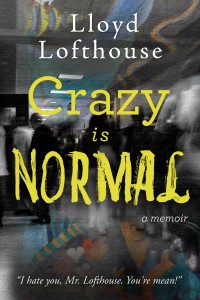
His third book is Crazy is Normal, a classroom exposé, a memoir. “Lofthouse presents us with grungy classrooms, kids who don’t want to be in school, and the consequences of growing up in a hardscrabble world. While some parents support his efforts, many sabotage them—and isolated administrators make the work of Lofthouse and his peers even more difficult.” – Bruce Reeves

Lofthouse’s first novel was the award winning historical fiction My Splendid Concubine [3rd edition]. His second novel was the award winning thriller Running with the Enemy. His short story A Night at the “Well of Purity” was named a finalist of the 2007 Chicago Literary Awards. His wife is Anchee Min, the international, best-selling, award winning author of Red Azalea, a New York Times Notable Book of the Year (1992).

To follow this Blog via E-mail see upper right-hand column and click on “Sign me up!”


Tags: , , , , , , , , , , ,