The UK’s Telegraph reports, “Formal schooling should be delayed until the age of six or seven because early education is causing profound damage to children, an influential lobby of almost 130 experts warns.”
Why do I disagree with these so-called experts?
The last time fools [my opinion]—like these—sparked a revolution in raising children, it led to the average American parent boosting a false sense of self-esteem in his or her children raising a generation of narcissists and/or sociopaths as recent studies have pointed out.
I’m sure some of these so-called experts will argue that in Finland children start school at age seven, and Finland has one of the most successful public school systems in the world.
But what you will probably not hear is that most parents in Finland start teaching their children a love of reading as early as age three—at home; are very supportive of education and teachers and that Finland’s teachers, who are in charge in the classroom, belong to a very strong teachers union.
Parents in Finland do not wait for teachers to do their job for them—a job made difficult for teachers in the United States where many children who have not been exposed to books at an early age have no love of reading when they enter the classroom for the first time [at any age].
Why what works in Finland will not work in the United States will be revealed in Part 2
Lloyd Lofthouse is a former U.S. Marine and Vietnam Veteran.
His latest novel is the award winning Running with the Enemy. Blamed for a crime he did not commit while serving in Vietnam, his country considers him a traitor. Ethan Card is a loyal U.S. Marine desperate to prove his innocence or he will never go home again.
And the woman he loves and wants to save was trained to kill Americans.
To follow this Blog via E-mail see upper right-hand column and click on “Sign me up!”
I walked to town this morning to see The Family, a film with Robert De Niro, Michelle Pfeiffer and Tommy Lee Jones.
But this post is not about The Family. It’s about a Contra Costa Times headline I saw halfway to the theater about Bay Area schools suspending suspensions and turning to alternatives in place of suspension.
This issue is not new to me. I taught for thirty years [1975-2005] and for sixteen of those years I taught English, journalism and then reading at Nogales High School in La Puente, California.
At Nogales, we had a place to send kids who refused to cooperate in class and/or who continued to disrupt the learning environment even after being warned several times to stop the unacceptable behavior.
In addition, she wrote: “But teachers at schools elsewhere say taking away the option to suspend creates a disciplinary void and sticks them with rowdy or even dangerous kids in class.”
As a teacher at Nogales, I usually dealt with rowdy or dangerous kids on a daily basis. But I could not suspend even one of my students from school. I could send them to an in-house suspension center that was called BIC—meaning Back in Control or Behavior Improvement Center. I have no idea what BIC meant. I may have asked once but forgot. I like both options, because they are both true.
A certified teacher who was working toward an administrative credential was in charge of BIC at Nogales—most of the time. Nogales had about 100 teachers on staff and there were between 2,300 and 3,000 students [depending on enrollment], and BIC is where we sent the rowdy and dangerous students who refused to cooperate in class.
For example, I send students to BIC almost every day and they were usually the same students. The teacher in charge of BIC once told me that 5% of the students earned 95% of the 20,000 annual referrals to BIC—that would be between 115 to 150 students earning 19,000 of those referrals or 126 – 165 each.
The primary job of a teacher is to teach the subject he or she is responsible for. This job can take 60 to 100 hours a week and that time includes creating lesson plans and correcting student work. When in class, teachers are involved with students and there is seldom any time to sit down and plan or correct. If a teacher teaches five classes for five hours a day for five days, that is twenty-five hours in class. The rest of the sixty to one-hundred hours is mostly spent planning or correcting work.
With an average class load of 34 students or 170 a day in five different classes, it is difficult to impossible to play the role of a therapist-parent replacement who is expected to undo the damage of dysfunctional parents and/or guardians who are responsible for the home environment that caused a rowdy or even dangerous student to become that way in the first place.
A teacher’s job is to teach the subject he or she was hired to teach and to make sure the annual standardized test scores teachers are held accountable for show improvement so the media and critics of public education will have less fuel to criticize the public schools and demonize teachers—something far too common in the United States.
If school suspension is not an option, schools must provide a place on campus where trained professionals deal with overcoming the damage caused at home and in the child’s environment. Most teachers do not have the time to do this.
For students who do not show improvement, he or she should be taken out of the home and sent to a juvenile boot-camp school where he or she lives in military style barracks with teachers and administrators trained to be tough disciplinarians—for example, modeled after a U.S. Marine Corps boot camp that doubles as a school.
Every punishment or stick should come with a reward or carrot. The rowdy and/or dangerous child who earned his or her way into a book camp school instead of a suspension/expulsion from a regular public school must earn his or her way out of the boot-camp school with improved behavior, literacy, math, and writing skills.
And those kids who fall off the proverbial-behavior wagon in the regular classroom get sent back to the book-camp school automatically.
Oh, and I enjoyed watching The Family and can’t understand why the average fan and critic gave this film a SO-SO review as reported on Fandango. I think they missed the point that children and even parents are a product of the environment they grow up in and life is relative to that fact—something that many in America elect to be deaf, dumb and blind to.
Lloyd Lofthouse is a former U.S. Marine and Vietnam Veteran.
His latest novel is the award winning Running with the Enemy. Blamed for a crime he did not commit while serving in Vietnam, his country considers him a traitor. Ethan Card is a loyal U.S. Marine desperate to prove his innocence or he will never go home again.
And the woman he loves and wants to save was trained to kill Americans.
To follow this Blog via E-mail see upper right-hand column and click on “Sign me up!”
Why can’t the United States learn from the best education systems in the world?
The Huffington Post reported that Finland and South Korea top country rankings while the U.S. is rated average at 17th among the 40 developed countries compared. “While Finland and South Korea differ greatly in methods of teaching and learning, they hold the top spots because of a shared social belief in the importance of education and its underlying moral purpose.”
It is a fact, that most American parents do not share or practice those same social beliefs and moral purposes.
The truth is that too many American parents don’t want their children unhappy or depressed and in a merit based system only so many can be in the top 5 – 10% and the rest lose out leading to embarrassment and unhappiness. In addition, far too many American parents would rather spend money on video games for their children than on tutors to teach the children after school.
Besides most American kids would declare war and probably butcher their parents if they had to give up a lifestyle that comes with an average 10 hours a day of dividing up free time watching TV; listening to music; playing video games; texting/social networking, etc.
In Finland, parents start teaching their children to read by age 3, and children start school at age 7 already literate, and the teachers—supported by the parents—make the major decisions in the classroom and the schools.
In South Korea, the educational system is based on meritocracy—for teachers and students—and the competition to earn a slot in the top spot is ruthless because everyone cannot be number one.
Amanda Ripley writing for The Wall Street Journal said in The $4 Million Teacher that “In 2012, [South Korean] parents spent more than $17 billion on tutoring from private schools—more than the $15 billion spent by Americans on videogames that year.”
While in 2010, the New York Times reported that in the United States, the estimated size of the tutoring industry was $5 billion to $7 billion a year.
How does that compare? Well, in the U.S. there are about 50-million students attending K – 12, and that is equal to South Korea’s entire population where only 6 million are students.
Crunch the numbers and Korean parents spend an average of $3,000 annually for each child for private tutoring. But in the US, parents spend—on average—about $100 – 140 annually, but we know that many American parents spend nothing extra to support public education—not even time!
In America—sad to say—about the extent of support most parents are willing to give is to ask a question or two later in the day or early in the morning.
“Honey, how was school today?”
The child replies, “Okay,” as he furiously texts friends.
“Did you do your homework?” the parent asks.
The child makes a face because he is being interrupted while sending his texts, and then he grumpily replies, “Yea.” And 80% [or more] of the children lie about this. In fact, the child usually doesn’t even know if there was homework because he didn’t pay attention in class or forgot.
Studies show that the average American parent talks to his or her children less than five minutes a day, because in the US, it’s a lot cheaper and easier to just blame the teachers and their unions when children/teens are not showing progress in school.
The educational systems of South Korea and Finland are very different but these countries exhibit similar traits that are mostly missing in America. Did you notice what those similarities are?
Lloyd Lofthouse is a former U.S. Marine and Vietnam Veteran.
His latest novel is the award winning Running with the Enemy. Blamed for a crime he did not commit while serving in Vietnam, his country considers him a traitor. Ethan Card is a loyal U.S. Marine desperate to prove his innocence or he will never go home again.
And the woman he loves and wants to save was trained to kill Americans.
To follow this Blog via E-mail see upper right-hand column and click on “Sign me up
My parents were both high school dropouts, but I grew up seeing them read books almost every day and that was probably the most important reason I did not grow up illiterate or functionally illiterate.
Millions of children in America are not that fortunate and never see his or her parents read anything. This image of the most important role model in a child’s life ends up being the foundation that leads to illiteracy.
On February 14, 2013, Valentine’s Day, President Obama said, “Let’s make it a national priority to give every child access to a high-quality early education.”
This message was also included in his second State of the Union address.
But conservatives have made it clear that they are against public supported, high-quality early education. Instead, conservatives want to give taxpayer money to private or church-based preschools and leave it up to parents to decide to send his or her children. Source: Mike the Mad Biologist
Mike the Mad Biologist quoted the Heritage Foundation, a far-right conservative think tank that is also part of the Koch Foundation Associate Program. To learn more about the political/religious agenda of the billionaire Koch brothers, click Discovering the four Koch brothers.
Then President Obama also said, “Fewer than 3 in 10 four-year-olds are enrolled in a high-quality preschool program.”
Because of those facts, the United States must take it one step further and make it mandatory for children that are not learning literacy skills at home before age four to start a high-quality early education literacy program in the public schools.
To do that, all children must be tested starting at age three and six months by having them read out loud to a properly credentialed educator-teacher to demonstrate that the child is learning to read simple, basic one-syllable words in simple sentence in addition to demonstrating understanding. Then every twelve months before starting kindergarten, those children must be tested again to see that he or she is improving. It would be easy. Every public school in America would receive the mandate and funding to support this simple test.
Children that fail the test would be enrolled in the type of program President Obama is talking about.
Obama said that these young children must be in a safe learning environment with high quality teachers that are held accountable. Private and religious schools are not held as accountable the same as the public schools. Private and religious schools have no oversight—no one watching what is going on in that classroom.
There are an estimated 121,169 libraries of all kinds in the United States today.
These facts say if we leave it up to most illiterate parents of illiterate children to enroll those children in a voluntary literacy program before age four, it will not happen—not in the United States.
In Finland, the parents do this at home. In Finland, most parents start teaching their own children how to read by age three. That does not happen to millions of young children in the United States.
The reason I think the conservative religious/political agenda regarding a high-quality early (public) education program in America is racist is because of the following numbers.
In 2003, about seven percent of white adults were reading below basic (this means they were functionally illiterate or illiterate), compared to 24% of Blacks, 44% of Hispanics, and 14% of Asian/Pacific Islanders. Source: National Center for Education Statistics
If we are going to break the cycle of the high ratio of race-based illiteracy in America, we must make it mandatory for children that are not learning literacy skills at home to be in a supervised public education, literacy programs before age four so the public in the United States knows that every child is safe from a possibly biased, conservative political and/or religious agenda.
His latest novel is Running with the Enemy. Blamed for a crime he did not commit while serving in Vietnam, his country considers him a traitor. Ethan Card is a loyal U.S. Marine desperate to prove his innocence or he will never go home again.
And the woman he loves and wants to save was trained to hate and kill Americans.
To follow this Blog via E-mail see upper right-hand column and click on “Sign me up!”
I think you have made a great point or at least inadvertently focused a spotlight on an important issue and why it is there. Turnover in a school or school district may be a red flag—a strong warning sign— that the school board/administration/students are not the easiest to work with or work for [another word would be dysfunctional ].
This could be extended to an entire state since each state has its own department of education that decides policy in that state as directed by the elected politicians from the governor of a state on down. Due to a need to gain votes, religious and/or political agendas tend to rule in such organizations and the winds may shift at any time.
For example, I friend sent me this about the current situation in the high school in Southern California where he now teaches.
I was a public school teacher from 1975 – 2005 and we worked together before dysfunctional administration at our high school and in our school district drove him to quit and find a job in another district that at the time was a better place to work.
But beware of the grass is greener over there syndrome because a drought will kill the green grass leaving behind sweltering heat and dust.
During my thirty years in the classroom, I worked under nine-different principals. Some were great, some good and some horrible.
The horrible ones drove teachers, counselors and VPs out of the schools where they ruled Nazi style and turnover could reach as high as fifty percent in a few years.
Good principals, who are usually a sign of good administration and a sensible school board, tend to hold on to staff.
I mean, how many people quit jobs—any job—with a boss that knows what he or she is doing; a boss that supports his workers in the best possible ways to make the work environment a place where we want to spend twenty to forty years of our lives?
My friend said of this school year (2012 – 2013):
“112 scheduling changes in the first three weeks (the classes he teaches)
“75% of the administrative team is new; a lot of chaos
“50% of the counselors are new; a lot of chaos
“We lost our department chairs, so there is no communication between the teachers and administration
[This high school, he says] “once had a top-notch academic program; however, we are falling apart at the seams; our test scores have flat-lined and they will continue to flat-line because there are just too many new faces at our school; two of our Vice Principals have never been a VP before; they’re nice people, but we have to wade through their learning curve.”
For another example: at the high school where I taught for the last sixteen of the thirty years I was in the classroom as a teacher, we had one new teacher quit at lunch on his first day on the job with two more classes to teach after lunch. During the lunch break, he walked in the principal’s office, tossed his room keys on the desk and said, “If they won’t show some respect for me and attempt to learn, then I refuse to teach them.”
I know from experience, that district did not do a good job creating a positive, supportive educational environment for its teachers because I worked in that district for thirty years. Instead, it was more of a combative environment that did not offer the support teachers wanted or needed to teach.
It is a fact that teachers teach and students learn. However, that is not always the case. Instead, teachers in a toxic educational environment often struggle to teach while too many students make no effort to learn.
Elected School Boards and the administrators they hire should support an environment where teachers may teach and students will learn, and we can learn from two of the best public educations system in the world: Finland and Singapore.
In Finland, the teachers have a strong union and the teachers make the decisions in a supportive educational environment and it works. Parents start teaching children how to read at age three but the first year of school is at age seven.
In Singapore, merit rules. Students must compete academically to earn where they are tracked and the system is heavily tracked based on performance. There is no self-esteem driven educational environment; there is corporal punishment and students may be publicly beat with a bamboo cane if caught breaking strict-rules built to support a merit based education system.
Why can’t we in the United States learn from Finland and Singapore?
I agree with a post I read at the quiet voice that there is too much of an emphasis in America’s public schools on sports and not enough focus on academics. But is that the fault of the public schools or the fault of the parents and the English speaking culture?
There is a vast difference between the US public education system and other countries such as Finland, China and Singapore. Because of those differences, to be fair, we cannot compare the results of US students with those countries unless we separate the genetically modified chaff from the organic grain and also compare apples to apples.
As a public high school teacher in California for thirty years (1975 – 2005), I taught four periods of English and one period of journalism for several years in addition to being the advisor of the student run high-school newspaper. One year, my journalism students were invited to write a series of pieces for a European magazine called “Easy Speakeasy“, headquartered in France. “Easy Speakeasy” expressed interested in the sports programs in US schools because we were told that these programs did not exist in France and other European countries. Sports in Europe were mostly outside of the public schools sort of like Pop Warner Football in the US.
Pop Warner was founded in 1929, continues to grow and serves as the only youth football, cheerleading & dance organization that requires its participants to maintain academic standards in order to participate. Pop Warner’s commitment to academics is what separates the program from other youth sports around the world. In fact, studies show that kids involved in sports that require them to maintain their academic grades above a 2.0 GPA graduate in higher numbers than students that do not participate in sports. Europe has programs similar to Pop Warner and I understand this is the only place students in Europe may participate in organized sports because these programs do not exist in European schools. In Europe and most countries, the focus in the public schools is academic and vocational—no sports, drama or music programs as in the US.
I can only guess that “Easy Speakeasy’s” editors invited my journalism students to write for their European publication because the high-school newspaper I was adviser for had won international recognition several years in a row from Quill and Scroll out of the University of Iowa.
In the English classes I taught there was a lot of chaff and only a little grain but in that journalism class, I taught the organic cream of our high school—students willing to be at school as early as six in the morning and stay as late as eleven at night to produce the high school newspaper—while many of my English students did not bring textbooks to class, do class work or even consider doing homework. Instead, there were students in my English classes that waged an endless war against academics disrupting the educational environment as often as possible.
Who do we blame for this educational environment in the United States?
Quill and Scroll offers academic scholarships. There is another organization called JEA (the Journalism Education Association) that also awards academic scholarships related to writing/academics. I know this because one of my journalism students earned a JEA scholarship. I required my journalism students to compete at the regional, state and national level in JEA academic writing competitions.
In addition, in most of the world there are two tracks in high school: academic and vocational and students in those countries may graduate from high school either with a degree earned in the academic or vocational. For that reason, comparing graduation rates in the US with other countries does not count because in the US we only graduate through academic programs but still graduate a higher ratio of students through the academic track than any other country on earth.
Then there are children in the United States that cannot read and are functionally illiterate. When we compare the US to all other English speaking countries, the rate of functionally illiterate children is about the same telling us that this is more a product of a culture that does not value learning and reading as much as countries such as Finland where the majority of parents start teaching his or her children how to read at home by age three so those children can already read when they start school at age seven.
But in the US, many parents leave it up to the schools to start teaching children to read at age five or six and only those children that were taught by his or her parents start out on track and move ahead.
Then there is the fact that the US may be the only country on the planet that mandates children stay in school, no matter what, until age sixteen to eighteen. In China, for example, there are about 150 million children in the grade schools but only about 10 million that remain in high school at age 15.
When the International PISA test is given in countries around the world, that test is given to a random sample of fifteen year old students. That means in the US, because almost every fifteen-year old is still in school, America’s students are being compared to the very best in countries such as China where students that are not the best academically have left the system by the time the PISA people show up.
However, when we filter out the chaff and leave only our most proficient students—for example: the journalism students that I taught—and compare them to the most proficient students of other countries, this being apples to apples, the US students beat every country in the world in every academic area tested. You will never hear these facts from the critics of public education in the US.
My wife and I walked to town today and saw the new Alex Cross movie with Tyler Perry. We enjoyed it and recommend it but consider reading the novels first.
James Patterson is the author of the Alex Cross series and I have read several. The novels featuring his character Alex Cross, a forensic psychologist who works as a private psychologist and government consultant, are his most popular and the top-selling U.S. detective series in the past ten years. Patterson has written 71 novels in 33 years. He has had 19 consecutive #1 New York Times bestselling novels, and holds The New York Times record for most bestselling hardcover fiction titles by a single author, a total of 63. James Patterson’s books have sold an estimated 260 million copies worldwide; in recent years his novels have sold more copies than those of Stephen King, John Grisham and Dan Brown combined.
Patterson says, “It’s our responsibility as parents to get our kids to read. This one is big. Huge! We can’t wait for teachers or librarians or their peers to do it. It’s our job to get our kids to read—not the teacher. We need to show them that it is fun and that it is cool. And give them books that will excite them.”
Patterson’s advice works. It wasn’t a teacher that motivated me to enjoy reading. It was my mother. After I fell in love with reading, there was no turning back.
When Patterson’s son was age eight, he and his wife told their child he had to read. His son didn’t like reading at first. By the end of that summer, he had read about seven books and loved most of them.
Watch the embedded video. Listen to what Patterson has to say. If you expect teachers to do the parent’s job when it comes to reading, then the child may be a loser for the rest of his or her life.
We already ask America’s public school teachers to do much more than just teach and demanding that they also do a parent’s job is ridiculous.
If you are a teacher or a serious parent more concerned about his or her child’s future as a working adult than a child having fun and/or being entertained all of the time, then this may be a teachable moment.
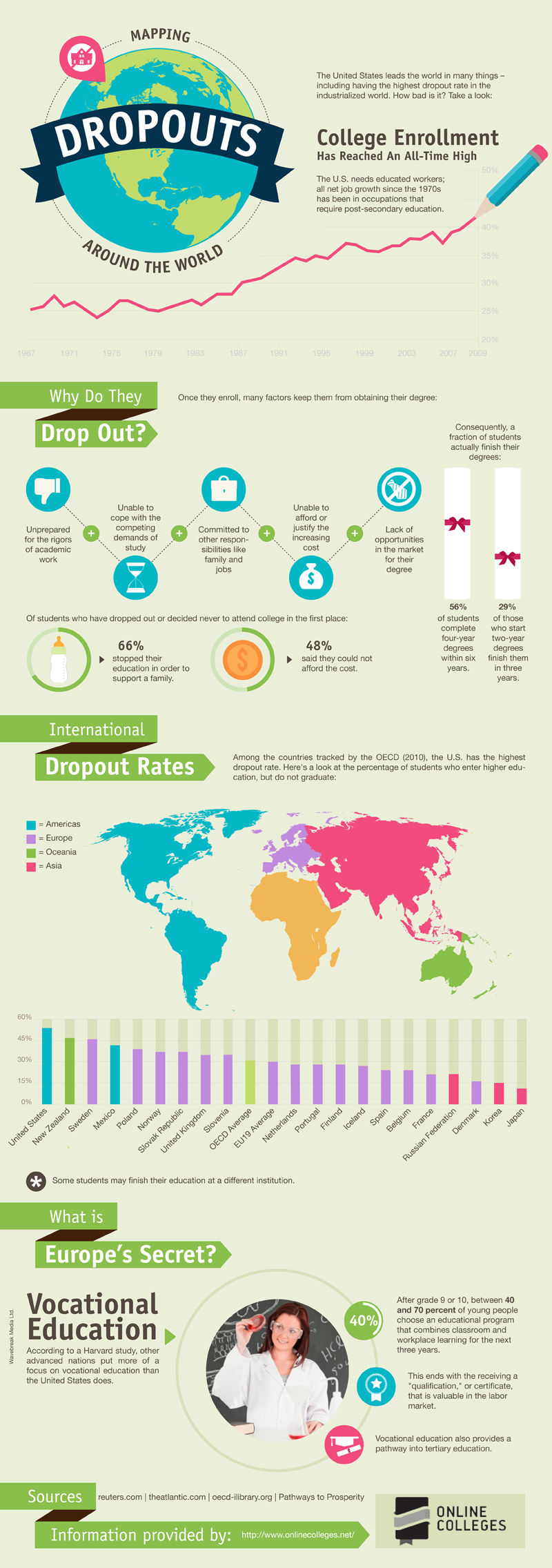
But first, 43% of adults at the lowest level of literacy lived below the poverty line, as opposed to 4% of those with the highest levels of literacy.
In addition, in 2010, the unemployment rate for adults that did not have a high school diploma was almost 16%. However, for adults with a Bachelors degree or higher (that means a college education), that unemployed rate was 5%.
In addition, since 1992, the unemployment rate for workers with a BA or better averaged 3.31%, but for high school dropouts the average was 8.84%. The lowest unemployment rate for college graduates was in 2001 at 1.5%, but it was 6% for high school dropouts the same year.
After I bought a copy of “Gifted Hands” at Costco recently, we watched the Ben Carson story. It was a film based on the life of a real person and the mother that made a difference in his life. Not once in the film was it suggested that it was the responsibility of any of Carson’s teachers to turn off the TV in Carson’s home and for his mother to tell him he had to visit the library and read books instead of watching TV.
In fact, the teachable moment may be to watch the film “Gifted Hands” (the entire film is embedded—second video—in this post and it has Spanish subtitles), then discuss who and what made the difference in Ben Carson’s life. Then have the child write a one page essay about what he or she learned about the importance of reading instead of watching TV.
Ben Carson’s mother had a third grade education and she got married at age 14 to later discover that her husband was a bigamist. For me, the teachable moment was when Carson’s mother turned off the TV and told her two sons that they were going to check books out of the library, read them, and then write a report of each book to be read out loud to the mother. She could not read but she could listen.
Ben Carson: An extraordinary Life – Conversations from Penn State
In the previous embedded video, at 6:32 minutes, Carson says once he started doing a lot of reading, he stopped hating poverty and realized that he didn’t have to stay in that lifestyle. He could change his life to anything he wanted it to be by working for it.
Note: I love using the word WORK to describe what we do as adults to earn money legally.
In one scene, Carson is being given an award for being the top student in his mostly white school and a teacher embarrasses him when she tells all of the white students in the room that they allowed themselves to be beaten by a fatherless black student living in poverty.
What that teacher did was uncalled for—it was cruel and racist. However, she told the white students they were lazy and could have easily beaten Carson for the academic honor he earned. She should have criticized the parents of those white students for letting their children watch too much TV.
The message I learned from this film pointed out exactly how to encourage students to learn to read and work hard in school to earn an education—not more laws that hold only public school teachers responsible for the education of a child.
Studies show that the average American child talks to his or her parents less than five minutes a day and spends more than 10 hours a day outside of school watching too much TV (on average three hours a day outside of school) in addition to playing video games, listening to music, social networking on the Internet, hanging out with friends, sending text messages, etc.
You may be able to watch the movie here. I found this link on You Tube, and it has Spanish subtitles.
There was another scene in the movie with a science teacher. When Carson was the only student in the class to answer a question, the teacher kept Carson after school, because when most teachers see an opportunity to help a motivated student, he or she does help. Teachers can only help students that help themselves and it is up to the parents to do the rest.
Carson’s mother had a third grade education but her son’s went to college. Today Benjamin S. Carson is the Director of Pediatric Neurosurgery at John Hopkins Children’s Center. His brother is an engineer. Through reading and an education, this family left poverty and the high risk of unemployment behind.
Answer this question: If Carson’s mother had left that TV on, do you honestly believe he would be where he is today?
We went to see ‘Won’t Back Down’ with Maggie Gyllenhall and Viola Davis, a film that ignores many facts of a complicated issue that causes students to turn out illiterate and schools to be considered failures.
Soon after the movie started, I complained. “If her (Jamie played by Ms. Gyllenhall) daughter has trouble reading, why doesn’t she turn off the TV and teach her at home as my mother did?”
My wife had to shut me up before someone complained to the management and had me tossed out of the theater. Censured and mute, I still wanted to rant and rave, and I did let loose after we left the theater.
You see, when I was seven (in the early 1950s), my mother was told I was retarded and would never learn to read or write. Back then, educators did not know about dyslexia. According to those experts, I was doomed to be illiterate for life.
However, I was not destined to turn out the same as my older brother. He died a broken and illiterate man at age 64 in December 1999. By the time I was seven and my brother twenty-one, my mother had learned her lesson because she watched and agonized over my brother’s decline. At age twenty-one, Richard had already spent time in prison. When he died, fifteen of his sixty-four years was spent locked up behind bars after spending too much time drinking in bars.
How did my working mom make a difference in my life? Answer: at home with primer books a caring teacher had recommended and eventually a coat hanger. The coat hanger appeared after I refused to cooperate. After all, it was hard work, it was boring, and I hated every moment of it, but my mother would not take NO for an answer. She had already lost one son to the dead-end life of illiteracy and was determined not to lose me to the same fate.
With my mother armed with that coat hanger, I learned to read. Today, my mother probably would have been charged with child abuse, and I would have been sent to a foster home and turned out illiterate. I do not resent my mother. I thank her for making an effort most parents today do not make.
To make a long story short, I learned to love reading books. By the time I graduated from high school, I was reading at college level above most of my classmates. Over the years, I earned an AS degree, BA, MFA and a life teaching credential.
‘Won’t Back Down’ is an anti-teacher union film pretending to care about the education of disadvantaged children.
Richard Roeper’s Reviews agrees with A. O Scott of the New York Times
When my wife and I returned home from the theater, I wanted to see what the New York Times had to say about the film and was not disappointed to see that A. O. Scott had revealed the movie’s biased propaganda.
Scott said “that (the films) pious expression of concern for the children are usually evidence of a political agenda in overdrive … and this one is not shy about showing its ideological hand.”
Scott says, the film “makes the vague claim to have been ‘inspired by true events,’ pits a plucky, passionate band of parents and educators against a venal and intransigent cabal of labor bosses and their greedy, complacent rank-and-file minions.”
The promise the film makes, says Scott is that “Once teachers give up job security and guaranteed benefits, learning disabilities will be cured, pencils will stop breaking and the gray skies of Pittsburgh will glow with sunshine. Who could be against that?”
Scott ends with, “however you take its politics, the film upholds a dreary tradition of simplifying and sentimentalizing matters of serious social concern, and dummying down issues that call for clarity and creative thinking. Our children deserve better.”
I want add to Scott’s last sentence. “Our teachers deserve better too.”
I know what it is like to be dyslexic. I’ve lived with it all my life. I also know what teachers go through, because I taught for thirty years (1975 – 2005) in California’s public schools. My average work week ran 60 to 100 hours. I often arrived at school as early as 6:00 in the morning when the gates were unlocked and sometimes worked as late as 11:00 at night when the alarms were turned on and the gates locked.
In the film, it seems the so-called evil teachers’ union limits the amount of time a teacher may stay after school to help students or meet with parents. The teachers’ union I belonged to never did anything like that. There are more than 14,000 school districts in the US and most have a contract with a teacher union so I cannot say that it isn’t that way in Philadelphia’s schools. It’s just that in my experience, I never heard of it.
In addition, at one point in my teaching career, I was in danger of being fired due to a censorship issue when I was the journalism advisor for the high school newspaper. Without the union, I’m convinced that I would have been fired for defending what my students wrote and published in one issue of the school paper.
Near the end of the film, Jamie, who works two jobs (one in a car dealership and the other as a bartender) to make ends meet, reveals that she is dyslexic and didn’t want her third-grade daughter, who is also dyslexic, to be left behind too.
There is a big difference between actresses playing the roles of a dyslexic mother and daughter and someone that is really dyslexic. For me, my mother made the difference. The schools did not teach me to read at a time when there were no unions in the California public schools that I attended.
In the film, why didn’t the character Ms. Gyllenhall plays help her daughter improve her reading skills at home? In fact, why are so many parents in America avoiding this responsibility? In Finland, a country with one of the most successful public school districts in the world with a very strong teachers’ union, parents start teaching their children to read at about age 3 at home, four years before starting school at age 7. The teachers in Finland have also been given a lot of responsibility regarding how those schools operate and they do it with parent support.
Instead, when we are in Jamie’s apartment in Pittsburgh, the TV is on and no books are in the child’s hands. When I was a child, my parents always had books around and read every night and that, along with my mother and that stinging coat hanger, made all the difference.
The truth is that NO teacher could have used that coat hanger on me as motivation to learn to read—then or now. In addition, my mother only had one child to teach at home while my teachers had classrooms full of children to teach. When I was still teaching, I often had 175 – 200 students in five, one-hour classes.
As A. O Scott wrote for the New York Times, it is a ‘complicated issue’.
However, I spend a lot of time attempting to explain those issues on this Blog. It’s too bad that studies and surveys reveal the painful truth that 80% of Americans after leaving or graduating from high school never read a book again—even to and/or with their children.
Those same parents will probably never read a Blog post this long, and I am sure of this—they will be very quick to blame teachers for children that grow up with no love of reading.
 Crazy Normal - the Classroom Exposé