RSS

Category Archives: media

Hot Coffee reveals the Capitalist threat to all aspects of Democracy

My wife and I watched an award winning documentary Thursday night (September 4, 2014). It was called “Hot Coffee: Is Justice Being Served?” The DVD for the documentary was released November 1, 2011, and Amazon sells the DVD for more than $24.00, but you may be able to watch it free on YouTube or from HBO for a lot less.

This is what I learned: if you don’t want Bill Gates, the Walton family or the Koch brothers—for instance—ruling America instead of the elected representative of the people, I urge you not to make the mistake that capitalism is the same as democracy. It isn’t.

Marriam-Webster.com defines capitalism as “an economic system characterized by private or corporate ownership of capital goods, by investments that are determined by private decision and by prices, production, and the distribution of goods that are determined mainly by competition in a free market”

By contrast, democracy is defined as “a form of government in which people choose leaders by voting and an organization or situation in which everyone is treated equally and has equal rights”

Under capitalism, everyone isn’t treated equally, and I’ve never heard of a corporate CEO elected by the people who work for the corporation the CEO rules over.

A member of the U.S. Congress is an elected—by the people—representative. The president is elected by the 538 electors of the Electoral College. Most states have a “winner-take-all” system—based on the popular vote of the people—that awards all electors to the winning presidential candidate. However, Maine and Nebraska each have a variation of “proportional representation.”

In fact, there have been four Presidential elections where the winner lost the popular vote of the people but won through the Electoral College: John Quincy Adams in 1824, Rutherford B. Hayes in 1876, Benjamin Harrison in 1888, and George W. Bush in 2000—yes, Al Gore had 540,000 more votes from the people than Bush, but G. W. won the electoral vote, 271 to 266. FactCheck.org

I’m going to copy the product description on Amazon here: “Everyone knows the case of the woman who sued McDonald s over spilled coffee. Or do they? More than 15 years after making international news, the case continues to be cited as an example of citizens who use frivolous lawsuits to take unfair advantage of the American legal system. But is that an accurate portrayal of the facts?

“An eye-opening documentary with jaw-dropping revelations, HOT COFFEE exposes how corporations spend millions on propaganda campaigns to distort Americans’ view of lawsuits forever changing the civil justice system. By examining the impact of tort reform on the lives of ordinary citizens, the film shows how Americans give up their Constitutional rights in all sorts of ways without knowing it for example, by voting for caps on damages or signing away your rights in contracts. Through interviews with politicians, judges, lawyers and ordinary citizens, first-time filmmaker and former public-interest lawyer Susan Saladoff delves into the facts of four cases to tear apart the conventional wisdom about jackpot justice.”

Watching this film, I discovered that the propaganda campaigns that were used to manipulate the justice system in the United States are also being used to distort Americans’ view of democratic public education.

Americans are literally being fooled—out of ignorance and laziness—to surrender their Constitutional Rights, vote out democracy, and replace democracy with a profit-driven, corporate oligarchy that doesn’t answer to the Constitution or the U.S. justice system. Watch the next video at your own peril.

_______________________

Lloyd Lofthouse is a former U.S. Marine and Vietnam Veteran,
who taught in the public schools for thirty years (1975 – 2005).

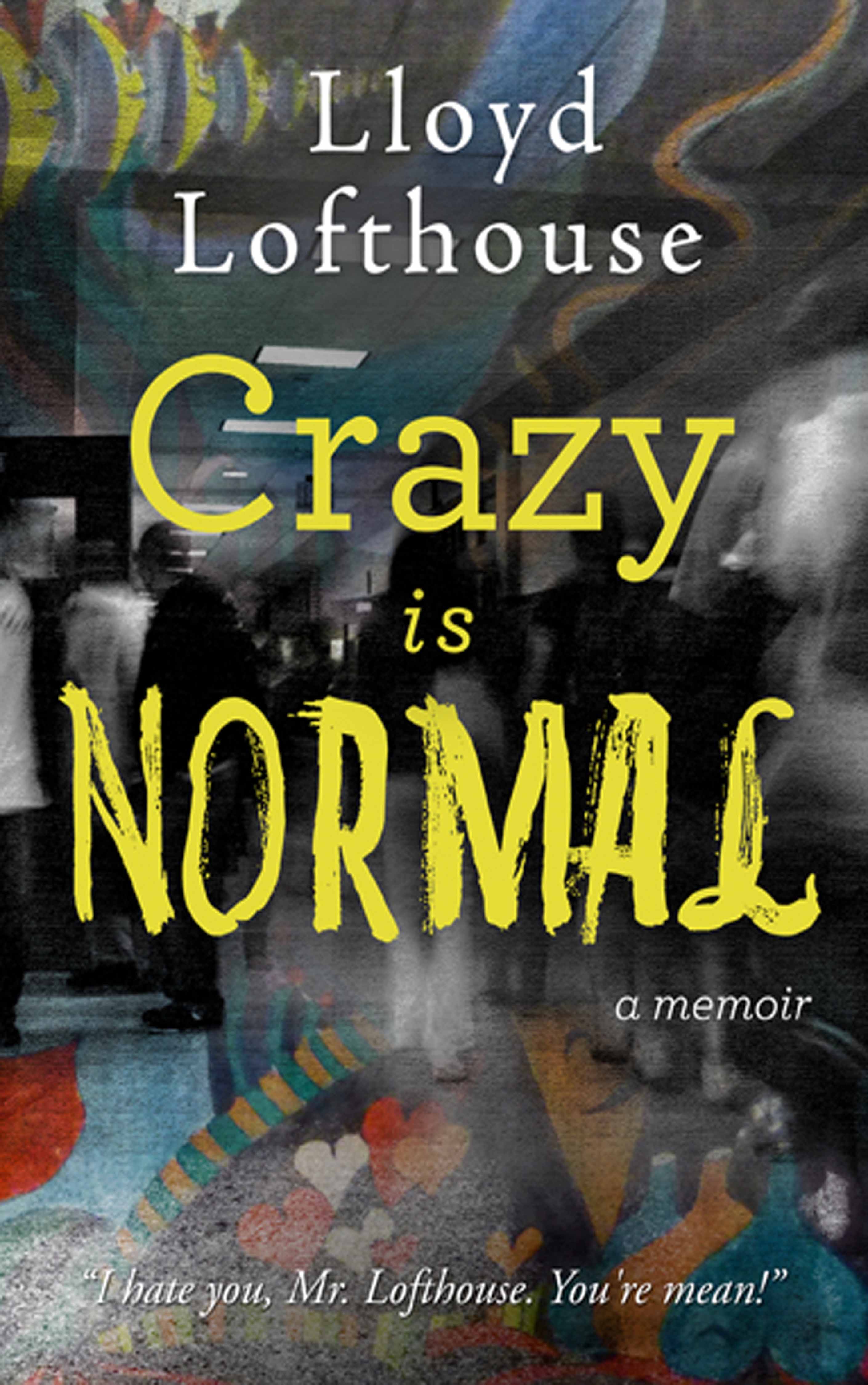
His third book is Crazy is Normal, a classroom exposé, a memoir. “Lofthouse presents us with grungy classrooms, kids who don’t want to be in school, and the consequences of growing up in a hardscrabble world. While some parents support his efforts, many sabotage them—and isolated administrators make the work of Lofthouse and his peers even more difficult.” – Bruce Reeves
lloydlofthouse_crazyisnormal_web2_5

Lofthouse’s first novel was the award winning historical fiction My Splendid Concubine [3rd edition]. His second novel was the award winning thriller Running with the Enemy. His short story A Night at the “Well of Purity” was named a finalist of the 2007 Chicago Literary Awards. His wife is Anchee Min, the international, best-selling, award winning author of Red Azalea, a New York Times Notable Book of the Year (1992).

To follow this Blog via E-mail see upper right-hand column and click on “Sign me up!”


Tags: , , , , , , , ,

The power of academic competitions for students who want to learn

During a Facebook conversation, an internet friend mentioned how nice it would be if there were academic competitions as popular as sports.

I replied that there are popular academic competitions for those students who are interested and who usually have supportive parents that value an academic education.

The public schools may not hold academic competitions with cheerleaders and bleachers full of shouting, screaming fans but there are competitions and they’re recognized and the winners are honored by the school districts and schools the students attend.

In fact, the media often reports the results.

Most if not all students in many public schools probably hear about the chance to compete in these competitions in home room where teachers read announcements or from science and math teachers. Most kids will soon forget what they heard but those kids who are called “school boys” or “school girls” often stop at the teacher’s desk to pick up the information. These kids are dedicated and hungry to cooperate and learn what the teacher teaches.

Here’s what I know. There’s the Science Olympiad; Academic Decathlon and The journalism Education Association (JEA) that conducts journalism competitions that includes competing in news, sports, feature, opinion, editorial cartoons, photography and page layout. The JEA calls them write-offs because they are timed competitions just like most sports and the judges are editors and reporters who work in the traditional media.

In fact, these academic competitions—although quieter and not as celebrated as a league title in one of the three major sports or even golf or tennis—are recognized and honored. The winners of these academic competitions are recognized at school board meetings where the children who win are called on stage to shake hands with the school board president and the superintendent of the school district. For families that value an education, entire families usually turn out and some dress as if they are attending the Academy Awards. Those school board meetings are usually packed with standing room only.

The United States Academic Decathlon was founded in 1968 in Orange County, California.

The Science Olympiad is an American elementary, middle, and high school team competition in which students compete in ‘events’ pertaining to various scientific disciplines, including earth science, biology, chemistry, physics, and engineering. Over 6,700 teams from 50 U.S. states compete each year.

The Journalism Education Association was founded in 1924. When I was advisor/journalism teacher for a high school newspaper, I took a team every year to this competition.

When our daughter was in high school, we encourage her to make friends with students who competed in one or more of these academic competitions. We also encouraged her to go out for a sport. She joined Academic Decathlon where she picked up a gold medal in debate and Pole Vault where at 16 she was ranked in the top five in California for her sex and age.  She graduates from Stanford this year and already has a lucrative job offer.

What’s distrubing is that in every class our daughter took in high school, there were kids who did little or nothing and some who caused problems. No matter what her teachers did, they couldn’t get those kids to work or gain support from the parents of those children.

And when standardized tests are given, the same teachers could be judged as failures and face losing their jobs because the scores of the students who didn’t cooperate dragged the average down—the same teachers who taught our daughter who earned that gold medal in Academic Decathlon could lose their jobs and the public high school our daughter attended before she was accepted to Stanford could be closed and replaced by a private sector Charter school owned by a corporation that would profit off tax payers.

And if you think only kids from the best schools in wealthy communities compete in these academic competitions, you’d be wrong. The high school where I taught had more than 70% of its students on free and/or reduced lunch/breakfast. That means they lived in poverty, but there were still kids who competed in these academic competitions and won medals making the school proud. There were kids at that school who had supportive parents.

_______________________

Lloyd Lofthouse is a former U.S. Marine and Vietnam Veteran,
who taught in the public schools for thirty years (1975 – 2005).

His first novel was the award winning historical fiction My Splendid Concubine [3rd edition]. His second novel was the award winning thriller Running with the Enemy. His short story A Night at the “Well of Purity” was named a finalist of the 2007 Chicago Literary Awards. His wife is Anchee Min, the international, best-selling, award winning author of Red Azalea, a New York Times Notable Book of the Year (1992).

To follow this Blog via E-mail see upper right-hand column and click on “Sign me up!”


Tags: , , , , ,

Democracy versus the Corporate Oligarchs

In a republic and/or democracy where eligible adults vote, the majority of voters decides who wins seats in Congress, and when elected—representing the people—Congress votes on bills/laws; the majority wins.

This is how it works in Congress. This is even how it works in the Electoral College during presidential elections—the presidential candidate who wins the majority of votes in the Electoral College becomes president. It doesn’t matter who wins the popular vote.

For instance, when President G. W. Bush was 1st elected, everyone didn’t vote for him. In the 2000 presidential election Bush had 271 electoral votes to Al Gore’s 266; more than 51 million Americans voted for Gore but their candidate lost and those voters had to live with President Bush for four years—the man they didn’t vote for.

Then in 2004, Bush won the White House a second time with 286 electoral votes to John Kerry’s 251; more than 59 million Americans voted for Kerry; they didn’t get the president they wanted.

That’s the way a democracy works, but that’s not what’s happening in the United States today when it comes to public school reform.

Teachers Union Exposed, an anti-teacher website, thinks it’s wrong that the two teacher unions should pay for lobbyists to represent the majority of their union members in Washington D.C.  Their reason: a minority of teachers don’t agree with political activity of the two unions.

Teachers Union Exposed claims “Unions don’t reflect members’ politics. … Over the last 20 years, the American Federation of Teachers (AFT) has given more than $28 million in campaign contributions; the National Education Association (NEA) has given almost $31 million.”

Teachers Union Exposed (I wonder who is behind this Website) points out that looking at polling data from the 2003 National Education Study, only 51 percent of teachers who are also union members identify as Democrats. The rest identify as Republicans (25 percent) or Independents (24 percent)” … and the “Harris Interactive poll from 2003 showed that 83 percent of Republican teacher union members felt that the union was more liberal than they were.”

How many Republican teachers are there? The NEA has 3.2 million members and the AFT 1.5 million. Do the math and that means 970 thousand (20.6%) of the 4.7 million teachers felt the union was more liberal than they were.

Big deal! How many Americans felt that President G. W. Bush was more conservative than they were? The same question could be asked about President Obama: how many Americans feel that he isn’t as conservative as they are?

It’s an established fact that in a democracy elected leaders can’t please everyone. But what happens when someone who isn’t elected spends money to influence the government and elections?

I’m talking about corporate oligarchs. Throughout history, oligarchies have been tyrannical (relying on public obedience and/or oppression to exist) or relatively benign, and corporations are run by CEOs who are not democratically elected.

For instance, Diane Ravitch posted Researchers Reveal Funding Network for Washington Charter Law and exposed the undue influence of oligarchs in an election. Ravitch says, “a small number of very wealthy individuals and organizations bought a policy of their choosing. This subverts democracy. It subverts the principle of one man, one vote. These are not reformers. They are plutocrats who use their vast wealth to buy what they want.”

The Ravitch post is long but worth reading. To keep it short, the plutocrats Ravitch writes about spent more than $35 million on one campaign in Washington State to support a YES vote on proposition 1240 in 2012—legislation that would benefit private sector charter schools paid for by taxpayers. Voters in Washington state had defeated similar propositions three times in the past, but the oligarchs refused to give up.

For a comparison, the leaders of the democratically run teacher unions spent $59 million over twenty years representing the majority of their members—who elected them to run the unions—in Washington D.C. That breaks down to $2.95 million annually, but the oligarchs spent more than $35 million for one proposition in one state.

Therefore, why is it okay for these alleged tyrants to spend fortunes to influence and manipulate voters but if the democratically elected labor unions that represents millions of teachers do it with a lot less money, it’s wrong?

In fact, one of the oligarchs, Bill Gates, has spent about $200 million to turn public schools over to corporations—private sector schools the taxpayers support.

That means one day the13,600 public school districts in the United States with more than 90,000 school teaching over 50 million children run by democratically elected school boards might vanish and America’s children would be turned over to billionaire oligarchs who run/own corporations. To discover how much Gates and his billionaire oligarch partners stand to gain from privatization of the public schools, click Big data and schools: Education nirvana or privacy nightmare?

In her post Ravitch listed about 20 oligarchs who donated money directly—or through nonprofit foundations the oligarchs financially support—to insure proposition 1240 passed and it did by a slim margin of 50.69% to 49.31%.

Who do you really think represents the interests of most Americans and their children: 4.7 million teachers—willing to die to protect children—who elect their union leaders, or 20 (alleged tyrants) billionaire oligarchs—protected by private security?

Discover more on this topic @ New Yorkers Denounce Cuomo’s Stacked panel to “Review” Common Core

_______________________

Lloyd Lofthouse is a former U.S. Marine and Vietnam Veteran.

His latest novel is the award winning Running with the Enemy. Blamed for a crime he did not commit while serving in Vietnam, his country considers him a traitor. Ethan Card is a loyal U.S. Marine desperate to prove his innocence or he will never go home again.

And the woman he loves and wants to save was trained to kill Americans.

To follow this Blog via E-mail see upper right-hand column and click on “Sign me up!”


Tags: , , , , , ,

The US versus the World—facts that reveal the truth about the International PISA test

On December 4, 2013, a New York Times headline shouted: “Shanghai Students Again Top Global Test”, and once again, America’s vocal critics of the U.S. Public Schools called for more reform.

Not so fast. In fact, maybe not at all.

In China, the first nine years of education is compulsory starting before age 7. Primary school takes the first six of those nine years; then there’s middle school for grades 7, 8, and 9.

Fifteen is the age of students who take the international PISA test—and in China [so-called] compulsory education ends at the age of fifteen and students who decide to stay in school have a choice between a vocational or academic senior high school track. That’s where the choice ends because in China the senior high schools pick students based on merit.

To explain how this works, the CCP has acknowledged a “9-6-3 rule”. This means that nine of ten children began primary school between the ages of 6 and 7; six complete the first five years and three graduate from sixth grade with good performance.

By the time a student reaches senior high school—grades 10, 11, and 12—most enrollment is in the cities and not in rural China. Most rural Chinese don’t value education as much as urban Chinese do. And many of the migrant urban workers from rural China still have some family back in the village where they often leave their younger children. And many migrant workers, when they retire from factory work, return to the village and the family home.

The United States, by comparison, keeps most kids in school until the end of high school at age 17/18. About 75% graduate on time and another 15% earn their high school diploma or equivalent GED by age 24—all on an academic track because there is no vocational public schools k to 12 in the U.S.

In addition, in China there is the Zhongkao, the Senior High School Entrance Examination, held annually to distinguish the top students who then are admitted to the highest performing senior high schools. This means that if the highest rated high school in Shanghai has 1,000 openings for 10th graders, the students who earn the top 1,000 scores on the Zhongkao get in and then the second highest rated high school takes the next batch of kids until the lowest rated senior high school in Shanghai gets the kids with the bottom scores on the Zhongkao.

Maybe actual numbers will help clarify what this means:

In 2010, 121 million children attended China’s primary schools with 78.4 million in junior and senior secondary schools. The total is 199.4 million kids.

According to World Education News & Reviews: “In 2010, senior high schools [in China] accommodated 46.8 million students (23.4% of the  199.5 million). But about 52 percent or only 40.8 million were enrolled in general senior high school, and 48 percent of those students were attending vocational senior high schools.”

That leaves 21.2 million enrolled in the senior high school academic track designed to prep kids for college—that’s 10.6% of the total. Then consider that Shanghai’s public schools are considered the best in China. This means that the fifteen-year-old students who take the international PISA in China are the elite of the elite attending China’s best public schools.

For a fair comparison—not what we’ll hear from the critics of public education in the United States—the Economic Policy Institute reports: “The U.S. administration of the most recent international (PISA) test resulted in students from the most disadvantaged schools being over-represented in the overall U.S. test-taker sample. This error further depressed the reported average U.S. test score. … But U.S. students from advantaged social class backgrounds perform better relative to their social class peers in the top-scoring countries [Canada, Finland, South Korea, France, Germany and the U.K.]” and “U.S. students from disadvantaged social class backgrounds perform better relative to their social class peers in the three similar post-industrial countries.”

In fact, “U.S. students from advantaged social class backgrounds perform better relative to their social class peers in the top-scoring countries of Finland and Canada. … and—on average—for almost every social class group, U.S. students do relatively better in reading than in math, compared to students in both the top-scoring and the similar post-industrial countries.”

_______________________

Lloyd Lofthouse is a former U.S. Marine and Vietnam Veteran,
who taught in the public schools for thirty years (1975 – 2005).

His third book is Crazy is Normal, a classroom exposé, a memoir. “Lofthouse presents us with grungy classrooms, kids who don’t want to be in school, and the consequences of growing up in a hardscrabble world. While some parents support his efforts, many sabotage them—and isolated administrators make the work of Lofthouse and his peers even more difficult.” – Bruce Reeves

lloydlofthouse_crazyisnormal_web2_5

Lofthouse’s first novel was the award winning historical fiction My Splendid Concubine [3rd edition]. His second novel was the award winning thriller Running with the Enemy. His short story A Night at the “Well of Purity” was named a finalist of the 2007 Chicago Literary Awards. His wife is Anchee Min, the international, best-selling, award winning author of Red Azalea, a New York Times Notable Book of the Year (1992).

To follow this Blog via E-mail see upper right-hand column and click on “Sign me up!”


Tags: , , , ,

Looking at IQ and learning if the level of intelligence has anything to do with success: Part 3 of 3

View as Single Page

Using IQ as an indication of the odds of success may be measured from other comparisons besides race.

First—Let’s look at income (World Top Incomes Database; Real U.S. 2010 dollars):

Psychology Today.com reports, The average IQ of individuals in the top 1% who earned $857,477  was 137.  The next level was the top .1% with an average income of $3,693,111 and an average IQ of 149.  Then we have the top .01% earning on average $16,267,243 with an average IQ of 160.

The other 99 percent with an annual income range of $0 to $335,869 had IQ’s—on average—that ranged from 60 to 136.

Second—a few examples of the average IQ of college majors:

The average IQ of a Physics and Astronomy major was 133; Mathematics Sciences 130; Engineering 126; Chemistry 124; Humanities & Arts 120; Agriculture 115; Health and Medical Sciences 111; Education 110, and Social Work 103. For the complete list, I suggest you click on Statistics Brain.com.

Third—Number of billionaires by continent in US dollars:

Africa has 13 (population of 995 million—1 for every 76.5 million people)

Asia 412 (4.14 billion—1 for every 10.048 million)

Europe 390 (739 million—1 for every 1.89 million)

North America 486 (529 million—1 for every 1.088 million)

South America 51 (386 million—1 for every 7.56 million)

Four— Poverty and low IQ:

Ascd.org says, “The effect of environment on the IQ of young children can be significant, particularly for children living in poverty. As the influence of poverty decreases, the importance of environmental conditions as a limiting factor on intelligence also decreases. By addressing the environmental issues created by poverty, it may be possible to weaken the link between low socioeconomic status and poor student performance on IQ (and other) tests.”

“A childhood spent in poverty often sets the stage for a lifetime of setbacks. Secure attachments and stable environments, so vitally important to the social and emotional development of young children, are often denied to our neediest kids. These children experience more stress due to loneliness, aggression, isolation, and deviance in their peer relationships, and they are more likely to describe feeling deprived, embarrassed, picked on, or bullied. As a result, they more often face future struggles in marital and other relationships.” (Ascd.org says)

Psycnet.apa.org says, “It is posited that low IQ children may be likely to engage in delinquent behavior because their poor verbal abilities limit their opportunities to obtain rewards in the school environment.”

Leading from the Sandbox.com says, “Signs of poor EQ include the inability to listen to others, defensiveness, unawareness of how we come across, lack of sensitivity to others’ feelings, an inability to deal constructively with conflict, a drive to control others, narcissism, and the need to have our own way.”

Conclusion: The evidence suggests that average to high IQ—when a child lives in a middle income or higher environment with stable parents—does have a vital role to play in later success, but IQ by itself isn’t enough to predict outcomes.

It is also possible, but rare, for a child to escape poverty as an adult. The odds are also against children with IQ’s lower than average.

In the end—no matter the IQ; SQ; EQ or LDs—parent involvement is the key that overcomes almost all obstacles to a child’s education. A key study in the UK says:” Overall, research has consistently shown that parental involvement in children’s education does make a positive difference to pupils’ achievement.” (nationalarchives.gov.uk)

Based on 49 studies, It is noted that the bulk of the research finds that a positive learning environment at home has a powerful impact on student achievement. The second approach is illustrated by Rhoda Becher’s extensive review of parent education literature, which finds numerous studies documenting effects of school-based programs that train low-income parents to work with their children. Effects include significantly improved language skills, test performance, and school behavior, as well as important effects on the general educational process. The third approach is illustrated by studies of community involvement which suggest that the degree of parent and community interest in high quality education is the critical factor in the impact of the school environment on the achievement and educational aspirations of students. (eric.ed.gov)

When the parents are not part of the learning process; are dysfunctional and/or abusive, the odds are against success no matter what teachers do in the classroom.

Return to Looking at IQ and learning if the level of intelligence has anything to do with success in life: Part 2 or start with Part 1

View as Single Page

_______________________

Lloyd Lofthouse is a former U.S. Marine and Vietnam Veteran.

His latest novel is the award winning Running with the Enemy. Blamed for a crime he did not commit while serving in Vietnam, his country considers him a traitor. Ethan Card is a loyal U.S. Marine desperate to prove his innocence or he will never go home again.

And the woman he loves and wants to save was trained to kill Americans.

To follow this Blog via E-mail see upper right-hand column and click on “Sign me up


Tags: , , , , , ,

Looking at IQ and learning if the level of intelligence has anything to do with success: Part 2 of 3

View as Single Page

I don’t disagree with evidence from studies that offer theories that even slow learners with lower IQ’s may achieve success in life but it’s arguable that the lower the IQ, the tougher the odds are of a child achieving their dreams as an adult later in life depending on what those dreams are—after all, few end up becoming President of the United States—and for instance: billionaires, millionaires, rocket scientists, super models, Academy Award winning actors, Grammy winners, or win gold medals at the Olympics.

While a high IQ is not a ticket to success and wealth, the evidence suggests that it helps. It’s also arguable that a person with a high IQ who also has high social intelligence (SQ/SI) stands a much better chance at success and a better quality of life than someone with a low IQ and high SQ/SI. Other factors that lead to the success of a child achieving their dreams later as an adult are motivation, discipline, perseverance, the ability to learn from failure, and evidence suggests that writing detailed goals and reading those goals daily also helps. There’s also emotional intelligence that some think is important. (examiner.com)

My biggest sin to the politically correct camp of self-esteem was to dare to mention the difference in average IQ’s between racial groups. The word one commenter used was racism. However, the fact remains that there is a difference in average IQ’s between racial groups.

Princeton.edu says, “The connection between race and intelligence has been a subject of debate in both popular science and academic research since the inception of intelligence testing in the early 20th century, particularly in the United States.” Forgive me if I don’t post that IQ comparison here. If interested, Google it.

Be warned, if you dare to step on this politically correct sacred ground that has been anointed by the holy water of the self-esteem movement, tread carefully.

However, it is arguable that IQ does play an important role in success and it’s not racist to say so. Instead of looking at IQ by race, we may also compare average IQ by country with the highest average IQ found in Asia where the top five are located: Hong Kong #1; South Korea #2; Japan #3; Taiwan #4, and Singapore #5. Those who argue that IQ tests are flawed because they were created by Caucasians in Europe/the United States, take note of the top five.

The United States is ranked #19 [tied with Hungry, Poland, Spain, Austria, Denmark, France, Mongolia, and Norway] with an average IQ of 98 and Finland is #25 with an average IQ of 97.

The ten countries with the lowest average IQ are all in Africa. Equatorial Guinea is the lowest with an average of 59. (Statistic Brain.com and Nation Master.com)

Continued on January 20, 2014 in Looking at IQ and learning if the level of intelligence has anything to do with success in life: Part 3 or start with Part 1

View as Single Page

_______________________

Lloyd Lofthouse is a former U.S. Marine and Vietnam Veteran.

His latest novel is the award winning Running with the Enemy. Blamed for a crime he did not commit while serving in Vietnam, his country considers him a traitor. Ethan Card is a loyal U.S. Marine desperate to prove his innocence or he will never go home again.

And the woman he loves and wants to save was trained to kill Americans.

To follow this Blog via E-mail see upper right-hand column and click on “Sign me up!”


Tags: , , , , , ,

Comparing public school performance in the United States: Part 1 of 3

The public schools in the United States are often compared to the public schools of other nations but what about comparing them to the charter and private sector schools in the United States?

The forces that want to turn U.S. public education over to the private sector—while obviously fooling many and robbing working middle class Americans to pay the rich—have worked hard for decades to paint the public schools and millions of dedicated, hard-working teachers as failures, but those claims are far from the truth—a truth that is difficult to prove.

The reason for this is because state and federal governments do not monitor the charter or private schools as they do the public schools. Bush’s No Child Left Behind and Obama’s Race to the Top focus on the public schools and ignore the others. For more information on private sector schools not being judged the same as the public schools, I suggest reading Comparing Private and Public School Test Scores from GreatSchools.org.

What’s at stake—more than one trillion annual tax payer dollars that funds public education nationwide. That means every ten years, those tax-payer dollars add up to more than $10 trillion. This money is one of the main reasons for the corporate attack on public schools.

To discover how the charter schools compare to the public schools, Stanford—a private sector university that is one of the top ranked universities in the world—conducted an in-depth study in 2009.

The study found that, on average, charter schools performed about the same or worse than traditional public schools. The Stanford study said that 46% of Charter schools were the same; 37% were worse [which means many public schools were better], but only 17% of the Charter schools were better.

The next study (public vs. private) was reported by the National Center for Education Statistics, a federal government website.

The goal of the study was to examine differences in mean National Assessment of Educational Progress (NAEP) reading and mathematics scores between public and private schools when selected characteristics of students and/or schools were taken into account.

Among the student characteristics considered were gender, race/ethnicity, disability status, and identification as an English language learner. Among the school characteristics considered were school size and location, and composition of the student body and of the teaching staff.

For Catholic and Lutheran schools—for both reading and mathematics—the results were again similar to those based on all private schools.

For Conservative Christian schools, the average adjusted school mean in reading was not significantly different from that of public schools.

In mathematics, the average adjusted school mean for Conservative Christian schools was significantly lower than that of public schools.

Continued on January 3, 2014 in Comparing public school performance in the United States: Part 2

_______________________

Lloyd Lofthouse is a former U.S. Marine and Vietnam Veteran.

His latest novel is the award winning Running with the Enemy. Blamed for a crime he did not commit while serving in Vietnam, his country considers him a traitor. Ethan Card is a loyal U.S. Marine desperate to prove his innocence or he will never go home again.

And the woman he loves and wants to save was trained to kill Americans.

To follow this Blog via E-mail see upper right-hand column and click on “Sign me up!”


Tags: , , , , , , ,

The Golden Age of Education in America is Today

The United States has never had a Golden Age of Education unless it is happening today, but the media and politicians with political/religious agendas—without exception—misrepresent the truth.  The art of deception is based on picking the facts you want the public to hear, and what’s left out of the message is what leads people to believe something that is false.

For example, the Smithsonian Magazine reported on July 30, 2013 that No, You’re Probably Not Smarter Than a 1912-Era 8th Grader. I wanted to read this piece when it first came out but didn’t get a chance until August 8th.

The piece goes into detail showing the sort of questions 8th graders were expected to know in 1912. What the Smithsonian does not mention is how many children were attending 8th grade in 1912 compared to today.

In 1912, 61.3% of 5-to-19-year-old whites were enrolled in school and less than 10% would graduate from high school. That percentage was even lower for Blacks and other races.

There is a huge difference between less than 10% of children motivated to learn who have supporting parents and the ninety percent of children who did not.

In fact, in 1918, every state required children to only complete elementary school.  And a movement in 1920 to extend compulsory education to 12th grade failed and would not be revived until after World War II.

WiseGeek.org says, “Prior to the passing of compulsory school attendance laws, education was primarily localized and available only to the wealthy, and it often included religious teachings. …

“By the 1950s, compulsory education had become well established, but the K-12 education system was really still in its infancy. Schools were still primarily localized, but education was no longer available only to the wealthy. Even in the 1950s, however, segregation by race was still common practice in public schools in the US.

“Then in 1954, in the US Supreme Court case Brown v. Board of Education of Topeka, Kansas, the Supreme Court ruled unanimously that racial segregation in public schools was unconstitutional.”

The Smithsonian piece is misleading because in 1912, students attending school were there because their parents believed in the value of an education, and sending children to school was still a luxury for most Americans who could not afford to send a child to school or felt an education was a waste of time.

Back then, many poor parents even sold their children as young as age five into servitude in the coal mines or factories—those children never had a chance to go to school. In some industrial cities, half the workforce was made up of children, who were much cheaper to employ and easier to manage than teenagers or adults. In some states it was also legal for parents to sell children into prostitution.

How bad was it? For example, in 1916, President Wilson pushed the Keating-Owen Act through Congress barring interstate commerce of goods produced by child labor, but a conservative U.S. Supreme Court ruled in 1918 that this law was unconstitutional because it infringed on states’ rights and denied children the freedom to contract to work. Source: Scholastic.com [recommended reading]

And in 1912, there was no parent-driven self-esteem movement that values dreams, having fun and feeling good over working hard to earn an education. There was also no TV, no video games, and no cell phones. A lot has changed in the last century.

I also compared the high school graduation rate for 17/18 year olds in 1912 with today. According to A Hundred Years Ago.com, “only 20% of youth attended high school in 1911 and less than 10% graduated.”

Today, even most high school dropouts are better educated than 90% of Americans in 1912. Since 1968, the US high school graduation rate has fluctuated in the 70% range and it has never been higher in the history of this country. In 2012, Wisconsin had the highest rate at 90% with Vermont a close 89.6%.

In 2012, The Washington Post reported, “Researchers found that graduation rates vary by race, with 91.8 percent of Asian students, 82 percent of whites, 65.9 percent of Hispanics and 63.5 percent of blacks graduating on time.”

If you are interested in the graduation rate of each state, click Governing.com, and you will discover that even the state with the lowest graduation rate today beats 1912 by a wide margin.

Do not be fooled again, because politicians, the media and critics of public education will keep telling us that the public education system in America is failing, but now you know the truth. It’s not perfect but it has never been better and it is still evolving—for better or worse.

Discover Educating Children is a Partnership

_______________________

Lloyd Lofthouse is a former U.S. Marine and Vietnam Veteran,
who taught in the public schools for thirty years (1975 – 2005).

His third book is Crazy is Normal, a classroom exposé, a memoir. “Lofthouse presents us with grungy classrooms, kids who don’t want to be in school, and the consequences of growing up in a hardscrabble world. While some parents support his efforts, many sabotage them—and isolated administrators make the work of Lofthouse and his peers even more difficult.” – Bruce Reeves

lloydlofthouse_crazyisnormal_web2_5

Lofthouse’s first novel was the award winning historical fiction My Splendid Concubine [3rd edition]. His second novel was the award winning thriller Running with the Enemy. His short story A Night at the “Well of Purity” was named a finalist of the 2007 Chicago Literary Awards. His wife is Anchee Min, the international, best-selling, award winning author of Red Azalea, a New York Times Notable Book of the Year (1992).

To follow this Blog via E-mail see upper right-hand column and click on “Sign me up!”


Tags: , , , , , , , , , ,

Taking it Global: Online Freedom of Speech versus the 6th Amendment

PBS.kids.org says, “Online bullying often called online harassment is a serious issue, and it’s getting more common.”

In fact, no one on the Internet—especially those that are transparent—is safe from an anonymous online bully, who uses the 1st Amendment of the US Constitution as a shield to abuse the character and/or reputation of individuals that are not anonymous online. For example, authors, who may also be publishers, often find their reputations as authors/publishers damaged by the comments of anonymous online bullies.

I have been doing extensive ongoing research on this issue due to my own run-in with a pack of these anonymous bullies recently (and a few years ago), and I have discovered that this is a problem that permeates Amazon (in addition to other sites such as Goodreads) affecting possibly hundreds and even thousands of people due to the fact that Amazon cannot, at this time, police itself efficiently or adequately to protect transparent people—mostly authors—that have become victims of alleged malicious and obviously premeditated attacks by anonymous people that demonstrate by their own words alleged sociopath-narcissist tendencies.

I have also come to the conclusion that we cannot blame Amazon.com for this toxic environment. Amazon is also a victim due to the “freedom of speech” dilemma. However, the 1st Amendment does not offer total protection from abusers.

1st Amendment Text: “Congress shall make no law respecting an establishment of religion, or prohibiting the free exercise thereof; or abridging the freedom of speech, or of the press; or the right of the people peaceably to assemble, and to petition the Government for a redress of grievances.”

Study these 1st Amendment words carefully. Nowhere does it say in the 1st Amendment that a private sector business and social network like Amazon.com cannot limit freedom of speech on its site. The key words are “Congress shall make no law …”, and Amazon.com does not make the laws.

In addition, The Freedom Forum clearly says that the First Amendment does not say anyone can say anything at any time, and the U.S. Supreme Court has rejected an interpretation of speech without limits.

The Supreme Court has ruled regarding libel and slander: “Was the statement false, or put in a context that makes true statements misleading? You do not have a constitutional right to tell lies that damage or defame the reputation of a person or organization.” Source: Freedom Forum.org

The virtual world is a new legal arena and the courts are dealing with hundreds of libel law suits monthly and, true to form, legislation at the state and national level is moving slowly as this hot button issue over “freedom of speech” gives cause for caution. Our elected representatives do not want to be smeared with accusations that they are limiting freedom of speech so they must tread cautiously or lose votes.

However, there is another side to this issue that I haven’t seen expressed yet.  Freedom of Speech is only one of the rights/protections that the US Constitution offers its citizens. What everyone seems to have overlooked is the Confrontation Clause of the 6th Amendment of the United States Constitution.

The Confrontation Clause has its roots in both English common law, protecting the right of cross-examination, and Roman law, which guaranteed persons accused of a crime the right to look their accusers in the eye. In noting the right’s long history, the United States Supreme Court has cited Acts of the Apostles 25:16, which reports the Roman governor Porcius Festus, discussing the proper treatment of his prisoner Paul: “It is not the manner of the Romans to deliver any man up to die before the accused has met his accusers face-to-face, and has been given a chance to defend himself against the charges.” It has also cited Shakespeare’s Richard II, Blackstone’s treatise, and statutes.

By allowing people to hide behind an anonymous identity on the Internet and allowing them to write negative reviews/comments and even level ad-hominem attacks against easy to identify individuals who are transparent, the 6th Amendment rights of these transparent people have been violated because one cannot look his or her accuser/s face-to-face and eye-to-eye.

After all, how can any author, for example, who is transparent and working under his or her real name, defend against alleged anonymous bullies on Amazon.com (and similar sites such as Goodreads)—that leave negative reviews or even YES votes to support those anonymous, negative reviews/comments—and have a chance to defend his or her damaged reputation by facing his or her critic face-to-face and eye-to-eye?

In this example, knowing the history of your critic might be vital if it is discovered that an anonymous person leaving negative reviews/comments has a hidden history of this sort of behavior on the Internet spreading criticism, lies and ad-hominem insults in addition to using what is known as SockPuppets to gain an unfair advantage thus establishing premeditation—the law says that premeditation is the contemplation of a crime well enough in advance to show deliberate intent to commit the crime; forethought.

In conclusion, because going to court to resolve this hot button issue may be too costly and beyond the average citizen’s ability to pay for justice, this issue may be open to a lawyer or law firm to take pro bono or as a class action suit on a consignment and/or contingency basis. The defendant in this sort of class action case might be a consumer, social networking sites such as Amazon.com—an online community similar to a town, city, state or nation and therefore held responsible to uphold the protections offered by the U.S. Constitution to its Internet citizens.

In this case, a transparent victim online, such as an author or other individual, should have the right to demand knowing who his or her anonymous critic/accuser is that may be smearing his or her good name and/or product. After all, the online environment has created a court of public opinion that if unchecked may damage the reputation and well being of an innocent victim.

Of course, there may be a simple solution to avoid having this issue reach and be defined by the United States Supreme Court: When a transparent person claims his or her 6th Amendment rights when confronted by an alleged online anonymous bully, Amazon.com—for example—automatically provides an online form that the anonymous person may fill out revealing his or her real-life name, location and information leading to his or her online history that could then be verified before publication, or the anonymous person may decide to delete his or her review/comment and remain anonymous. If the anonymous person refuses to cooperate, Amazon may refuse to offer them a forum on its site and remove every review/comment made by that anonymous individual. Eventually, even the SockPuppets an anonymous person may have created might be revealed and vanish under such a policy.

_______________________

Lloyd Lofthouse, a former U.S. Marine and Vietnam Veteran, is the award winning author of The Concubine Saga.

His latest novel is Running with the Enemy. Blamed for a crime he did not commit while serving in Vietnam, his country considers him a traitor. Ethan Card is a loyal U.S. Marine desperate to prove his innocence or he will never go home again.

And the woman he loves and wants to save was trained to hate and kill Americans.

To follow this Blog via E-mail see upper right-hand column and click on “Sign me up!”

 
2 Comments

Posted by on March 13, 2013 in government, media, politics


Tags: , , , , , , , , , ,

Winning the Genetic Lottery may not be enough

For months, I’ve been searching for studies that show the odds of winning the job/career lottery that leads to a glamorous/famous, wealth growth job.

I didn’t find my answer from a study. I found it from a super model, Cameron Russell.

What Cameron Russell says in this YouTube TED video is the real story of dream jobs. She says, “I am standing on this stage because I am a pretty white woman and in my industry we call that a sexy girl. … The real way I became a model is I won a genetic lottery and I became the recipient of a legacy. Saying you want to be a model when you grow up is akin to saying you want to win the Powerball when you grow up. It’s awesome and it’s out of your control and it’s not a career path.” Source: Shine.Yahoo.com


Pay attention to Cameron’s words. She offers wise advice about reality and life.

Before I go on, I want to say that genetics is not the only factor in many dream jobs/professions. Dedication, hard work and persistence also play a part in fields such as sports, acting, the arts, etc.

But, what Cameron has to say holds truth for all of the dream jobs that so many young people chase often destroying his or her future.

It’s okay to have a dream but dream realistically.  The odds are against anyone becoming a super model like Cameron Russell, an icon in football, baseball, or basketball, for example. This also applies to acting, the music industry and being a published author no matter what path an author takes such as indie, self-published or traditional.

That is why I believe every child, teen and young person must have a backup plan that is realistic but often leads to a boring job—when dreams fail to materialize—that pays more than working for Wal-Mart, the fast-food industry, cleaning pools, cutting crass, washing dishes, tending bar or waiting on tables.

Being a life-long-learner is important to having a backup plan and this message is for parents. It is your job to make sure your child loves to read and sees that learning is important and not boring and a waste of time. The future belongs to life-long learners.

Education is getting a bad rep from the media in the United States and college educations are under attack. Why?

Who stands to benefit from an ignorant, functionally illiterate population struggling to survive on minimum wages working in insecure jobs?

Discover Education’s Accountability Dilemma

_______________________

Lloyd Lofthouse, a former U.S. Marine and Vietnam Veteran, is the award winning author of The Concubine Saga.

His latest novel is Running with the Enemy. Blamed for a crime he did not commit while serving in Vietnam, his country considers him a traitor. Ethan Card is a loyal U.S. Marine desperate to prove his innocence or he will never go home again.

And the woman he loves and wants to save was trained to hate and kill Americans.

To follow this Blog via E-mail see upper right-hand column and click on “Sign me up!”


Tags: , , , , , , , , , ,