RSS

Category Archives: Lloyd Lofthouse

How to identify abusive and incompetent Pub-Ed administrators and elected school boards

Don’t read me wrong as you read this post. There are some great administrators in the public schools but some are horrible and in this post you will meet a few.

The problem is that the incompetent administrators don’t think they’re incompetent—they think everyone else is. Imagine a school with a hundred teachers and one really bad principal and he thinks most of the teachers don’t know what they are doing so he tells them what to do and that advice backfires. Who do you think gets blamed for that principal’s failure?

In addition, school boards are elected and sometimes some can be misguided and ignorant, and it doesn’t help when the district administration is just as bad or worse.

It’s actually easy to identify the incompetent administrators if you know what to look for. With 13,600 public school districts in the U.S. and more than 1,000 of them in California where I taught for thirty years, it makes sense that some would eventually end up being managed by idiots who would make Hitler, Mao and Stalin envious.

My first full-time teaching job started in 78-79 when Ralph Pagan, my first principal, hired me one summer and asked me to drive from Chicago to Southern California by Monday.  The call came 48 hours before the school year started, and we drove straight through only stopping for gas. That was quite a drive.

The first three years before that phone call, (75-78), I was a full-time, paid intern (75-76), and then a substitute for the next two years in seven school districts.

I think Ralph Pagan was a genius, and he spoiled me. He managed Giano Intermediate like the schools in Finland by turning the school over to the teachers and together with Ralph’s support we turned a school that had a bad reputation and was considered one of the most dangerous schools in California’s San Gabriel Valley into a success story.

Ralph supported the teacher teams on just about every decision made on discipline and curriculum, and he ran interference between district administration and teachers—but we didn’t know that until after he had his heart attack/stroke. The pressure the idiots who worked in the district office caused for Ralph with their incompetence must have been intense to almost kill him and land him in the hospital.

Until I retired in 2005, the few highly placed district administrators in Rowland who managed the district were incompetent, because no matter what language was used to describe how the district was managed, teachers weren’t part of the decision making process. We were usually told what to do by someone who worked in the district office and if that often no-choice mandate didn’t work, teachers got the blame for the failure even if they had never liked what they were forced to do.

In addition, I walked picked lines more than once when the district had more than enough money to cut class size and increase pay to keep up with the cost of living, but the district fought us almost every time we negotiated a new contract. I’ve been out of the classroom now almost ten years, and I have no idea what the elected Rowland Unified school board is like or if the top district administration is competent and fair. I hope so. The teachers deserve the best, and they also deserve to be part of making major decisions that reach into the classroom and affect kids. If a majority of teachers don’t like a curriculum or program that administration is in love with, that program shouldn’t be used.

In this post, I want to shine a spotlight on Chino Valley Unified School District in Southern California. A former colleague-teacher and friend of mine, who once worked at Nogales in Rowland Unified—until he couldn’t stand the incompetent decisions micromanagers out of the district office were making that hurt teachers and kids—left to teach in Chino where he was happy until recent years. Once you watch the video, you’ll know how to identify incomplete public school leadership from the elected school board to the top administration.

My friend wrote in his e-mail: “I thought you might want to read about the sad state of negotiations in my district (The Chino Valley Unified School District). Of course, you experienced this type of negotiating in the Rowland Unified School District when you were teaching. Feel free to use this information in your Crazy Normal blog.”

_______________________

Lloyd Lofthouse is a former U.S. Marine and Vietnam Veteran,
who taught in the public schools for thirty years (1975 – 2005).

His first novel was the award winning historical fiction My Splendid Concubine [3rd edition]. His second novel was the award winning thriller Running with the Enemy. His short story A Night at the “Well of Purity” was named a finalist of the 2007 Chicago Literary Awards. His wife is Anchee Min, the international, best-selling, award winning author of Red Azalea, a New York Times Notable Book of the Year (1992).

To follow this Blog via E-mail see upper right-hand column and click on “Sign me up!”


Tags: , , , ,

Education Bloggers Network Supporting the Public Schools

  • Dr. James Arnold is a product of public education. A native of Sunflower County MS, he graduated from Provine HS in Jackson MS in 1970, Ole Miss in 1974 with a Bachelor’s Degree in Music Education, Ole Miss again with a Masters in Music in 1977 and the University of Alabama in 1993 with an Ed. D in Secondary Education. He served Lamar County AL as band director grades 6-12 from 1974–1991 and moved to Columbus GA as Director of Bands at Columbus HS in 1991. After the CHS band grew from 27 members to 225 in 1995, he was named Assistant Principal at Shaw HS, Principal at Shaw in 2001 and Superintendent of Pelham City Schools in 2010. He is a published author, has written 7 children’s books and contributes regularly to the Atlanta Journal and Washington Post on educational matters.

  • Arthur H. Camins is the Director of the Center for Innovation in Engineering and Science Education (CIESE) at the Stevens Institute of Technology where he leads the Center’s curriculum, professional development and research work. He writes about issues related to education policy and STEM education.
  • Gerri Songer’s blog We Are More offers information intended to support teachers, public schools, and public education in America. Gerri is the Education Chair of the District 214 Education Association and she has 23-years’ experience working with both special education and general education students at the secondary level.
  • Paul Thomas hosts The Becoming Radical. He taught high school English in rural South Carolina before moving to teacher education where he’s an Associate Professor of Education at Furman University, Greenville, SC. He’s also the author of several books that may be found through his Amazon author’s page @ P. L. Thomas.
  • Russ Walsh hosts Russ on Reading where he discusses sound literacy instruction, support for teachers and defends public education.

  • Ralph Ratto is an elementary school teacher just trying to do the right thing. He hosts Opine I will.
  • Dave Greene is a former High School Social Studies teacher and coach in The Bronx, Greenburgh, NY and Scarsdale, NY. He has been an adjunct for Fordham University, mentoring Teach For Americans in the Bronx. He is a staff member of WISE Services, an advisor to the Foundation For Male Studies, a HS football coach, and is the treasurer of Save Our Schools March. Dave is also the author of Doing the Right Thing: A Teacher Speaks, and hosts DCGEducator: Doing the Right Thing.
  • Ken Bernstein posts at the Daily Kos and says that only a quarter of what he publishes there is on education.
  • Marie Corfield is a mother, artist, teacher, education activist, former NJ State Legislature candidate—that teacher in that Chris Christie You Tube video (below)—writes about education, poverty, politics, women’s issues, social justice and lives in a world gone strange.

Lovell recommends Tom Newkirk’s Holding On to Good Ideas in a Time of Bad Ones: Six Literary Principles Worth Fighting For and his 2013 Postscript: Speaking Back to the Common Core

  • Susan DuFresne and Katie Lapham co-author the Blog Teachers’ Letters to Bill Gates. Their mission is to create a dialogue with Bill and Melinda Gates in order to achieve a democratic influence on public education through the voices of education researchers, professors of education,administrators, school board members,  professional teachers, parents, students, and community members.


This is a film about the impact of poverty and corporate education reform on children.


Apple is giving 5 week trained TFA’s a free iPad, not to professional teachers with BA, MA, or National Board Cert Teachers.


How does Finland teach their children? Through Trust!

Stu Bloom wants to look closely at what’s happening in our schools and try to determine why it’s the politicians who are determining the curriculum and teaching methods. He wants to figure out why teachers have become the enemy to so many Americans and what he can do to rectify that misconception. He wants to help re-make the public schools in the US into places where children learn and teachers teach and discover the joy of that interaction. Stu wants to figure out ways to make readers and thinkers out of students … and he wants to find ways to help them let go of the pain of failure and learn to enjoy learning.

_______________________

Lloyd Lofthouse is a former U.S. Marine and Vietnam Veteran,
who taught in the public schools for thirty years (1975 – 2005).

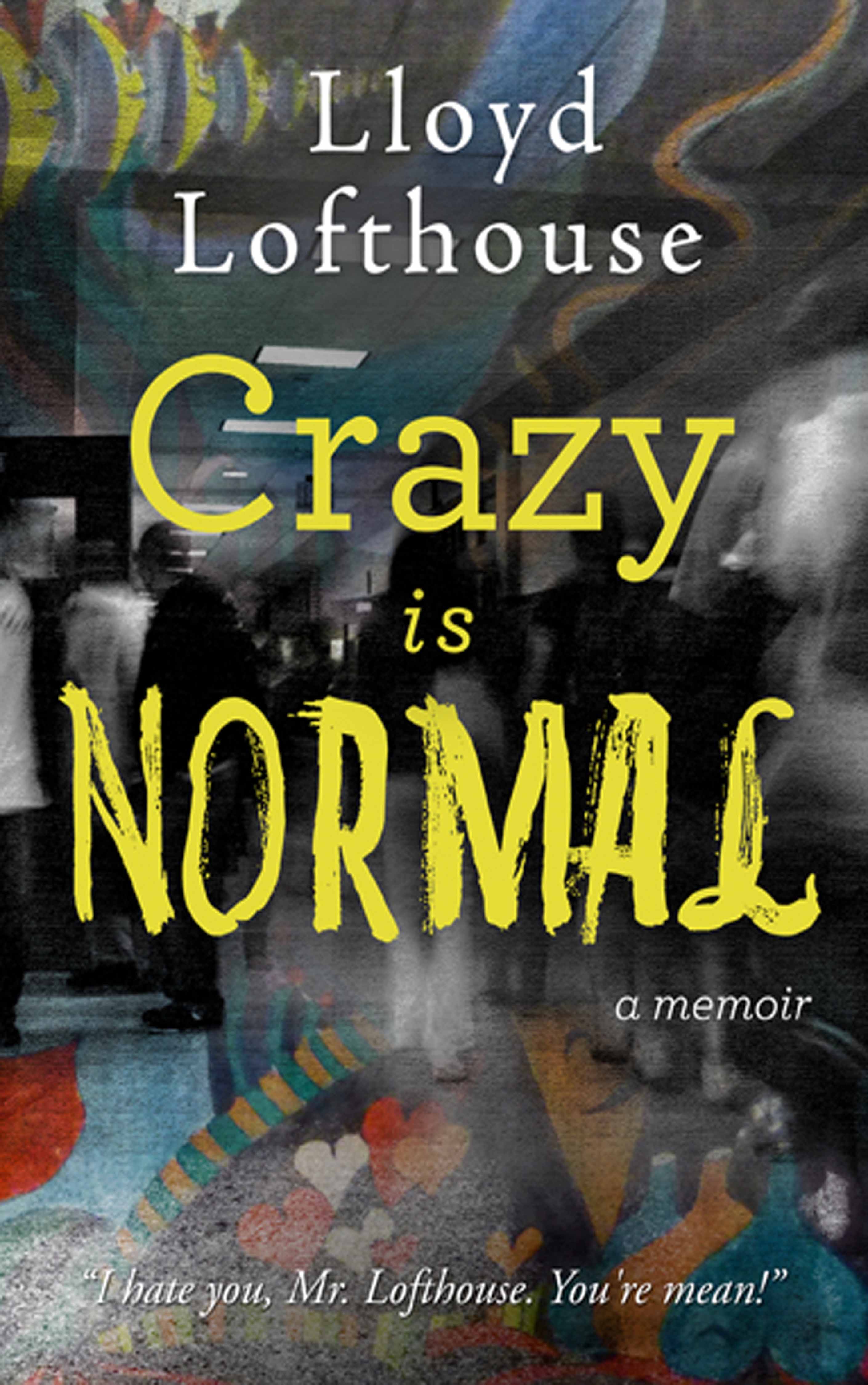
His third book is Crazy is Normal, a classroom exposé, a memoir. “Lofthouse presents us with grungy classrooms, kids who don’t want to be in school, and the consequences of growing up in a hardscrabble world. While some parents support his efforts, many sabotage them—and isolated administrators make the work of Lofthouse and his peers even more difficult.” – Bruce Reeves

lloydlofthouse_crazyisnormal_web2_5

Lofthouse’s first novel was the award winning historical fiction My Splendid Concubine [3rd edition]. His second novel was the award winning thriller Running with the Enemy. His short story A Night at the “Well of Purity” was named a finalist of the 2007 Chicago Literary Awards. His wife is Anchee Min, the international, best-selling, award winning author of Red Azalea, a New York Times Notable Book of the Year (1992).

To follow this Blog via E-mail see upper right-hand column and click on “Sign me up!”


Tags: , , ,

Who Crowned Bill Gates the Emperor of Education?

Over on Mercedes Schneider’s Blog, she tackles and criticizes Bill Gates view of the Common Core State Standards.

“Bill defines standards as a ‘list of what kids are supposed to know’ at each grade level.”

But Mercedes, Bill Gates is correct in his thinking—for computer programs stored on hard drives—not children. After all, in his Microsoft world where he’s the Emperor, if he pays programmers to write a computer program, the finished product better work or else, right? And the Emperor did pay more than $2 billion to create the Common Core standards and convince the states to accept them.

Bill Gates must honestly think that teachers are incompetent when the same process doesn’t work between teachers (the Emperor must see teachers as programmers) and children (as programmed computer hard drives) who don’t know the standards on the Common Core curriculum program that Gates paid for.

I wonder if Emperor Gates knows that a child’s brain doesn’t work like a computer program on a hard drive, because children don’t all live in the same environment with equal and supportive parents. In fact, teachers don’t teach the same way and every child’s DNA is different along with how they learn.

For the Gates’ list of Common Core Standards to work, every child would have to grow up in a similar common environment with parents who love reading, start reading to and with their child by at least age three and support teachers every step of the way from pre-school to graduation; from high school and beyond. Every child would also have to have an equally efficient short and long term memory (the same hard drive), and there could not be any learning disabilities to get in the way. This common environment would also include the same nutritious, brain food diet for breakfast, lunch and dinner, with no sugary sodas—only safe-to-drink water.

No parent could be abusive in any way—a drug addict, an alcoholic, a chronic gambler, illiterate and every family would have to earn a livable wage—meaning no poverty.

In addition, every parent would have to attend parent conferences with their children’s teachers and keep an eye on grades so if any grade fell below a C, the parent would call the same day and schedule an appointment with the teacher to find out why it happened and what they could do to fix the problem since failing grades are usually caused by children who—for instance—don’t pay attention, hate to read, don’t work in class, have lousy diets, don’t get enough sleep, watch too much TV, play too many video games, don’t cooperate, cause disruptions in class, don’t ask questions or seldom if ever read outside of class or do homework.


Learn from a 15-Year-Old how dangerous Emperor Bill Gates really is!

Emperor Gates, unlike a computer programmer, the greatest teacher can’t update a child’s memory with a patch to make sure the child learns your list of Common Core standards—that is if the child learned and remembered what the teacher taught in the first place.

For the Gates’ “Common Core list” to work, every child would have to arrive at school equally eager and willing to learn what teachers teach, and every parent would have to consider Amy Chua, the author of “Battle Hymn of the Tiger Mother” as a role model and not an abusive, tiger parent—and that ain’t going to happen in the United States.

I have a question for Emperor Gates:

Since when did the electorate agree that you should use your great wealth to decide how this country should educate the 49 million+ children who attend public schools while ignoring the 7.4+ million who attend private schools?

I want to ask President Obama and Secretary of Education Arne Duncan the same question. I thought the Constitution—the law of the land—written by the Founding Fathers of the United States made this sort of thing a crime.

In conclusion: It seems that every week—this has been going on for years—a new update arrives from Microsoft to patch something wrong with Microsoft’s operating system. Considering these constant flaws that keep appearing in programs written by Microsoft programmers, Emperor Bill Gates should be the last person to advise the Obama White House how fix the unbroken public schools that really only need him and the other fake education reformers to butt out. The best people to patch anything in the public schools are teachers supported by everyone else, because that’s they were trained for, and that’s what Finland does.

_______________________

Lloyd Lofthouse is a former U.S. Marine and Vietnam Veteran,
who taught in the public schools for thirty years (1975 – 2005).

His third book is Crazy is Normal, a classroom exposé, a memoir. “Lofthouse presents us with grungy classrooms, kids who don’t want to be in school, and the consequences of growing up in a hardscrabble world. While some parents support his efforts, many sabotage them—and isolated administrators make the work of Lofthouse and his peers even more difficult.” – Bruce Reeves

lloydlofthouse_crazyisnormal_web2_5

Lofthouse’s first novel was the award winning historical fiction My Splendid Concubine [3rd edition]. His second novel was the award winning thriller Running with the Enemy. His short story A Night at the “Well of Purity” was named a finalist of the 2007 Chicago Literary Awards. His wife is Anchee Min, the international, best-selling, award winning author of Red Azalea, a New York Times Notable Book of the Year (1992).

To follow this Blog via E-mail see upper right-hand column and click on “Sign me up!”


Tags: , , ,

Cherry picking facts without lying to make the bad look good or the good look bad

It’s easy to manipulate facts. The fake Ed reforms do it all the time to make the public schools look bad, and even some public schools cherry pick facts to look good. Technically what both sides share with the public are not lies, but they don’t paint a holistic and/or honest picture either.

For instance, I checked several on-line accountability school report cards for the high school (I will not provide the links or name of that school here) where I taught for the last 16 years of the thirty I was a classroom teacher (1975 – 2005).

For instance, that high school reported that the 2012 graduation rate was more than 89% for the 449 (from a class of 502) seniors who graduated on time that year. That’s way above the national average of 78.2% for 2010 (the highest national average on-time graduation rate in U.S. history), and the reported average for California that was even better that year at 78.5% (reported by the L. A. Times).


Why do so many Americans earn their high school diploma between the age of 18 and 25?

The high school’s accountability report card that’s posted on-line shows for 2011-12 that there were:

  • 545 students in 9th grade
  • 631in 10th
  • 581 in 11th (This is the year most students turn 16 and by law they may drop out of school—did you notice the 8% drop from 10th grade and an additional 14% drop by the end of 12th grade)
  • 502 in 12th grade.

But nowhere is there any information about how large the 2012 graduating class was four years earlier in 9th grade. To discover that, I had to find the on-line accountability report card for 2008-09, and I did. When you know a school’s name, Google is great—most of the time.

During the 2008-09 school year, there were 659 students in 9th grade, but four years later only 502 were still there. Where did the other 157 go? Did they move, drop dead, drop out, transfer to other schools? Why isn’t there an explanation? 659 students started as 9th graders in the class of 2012 but only 449 graduated—that’s an almost 32% drop.

It probably would have been more realistic to say: The on-time graduation rate for 2012 was 68.2% when taking into account the number of students who started in 9th grade four years earlier. Then there should be an explanation of what happened to the other 210 kids, but that might not look good for the school district. Instead, administrators at the district level probably went through the figures—with legal advice to make sure they weren’t breaking any laws—and cherry picked facts that end up looking better than the holistic story.

And of course the fake Ed reformers never mention how many adults in the U.S. have earned a high school degree or its equivalent by age 25. For 2013, that number was 88.15%.

The reality is that everyone doesn’t learn at the same speed; doesn’t mature at the same pace, and better late is better than never.

Instead, the fake Ed reformers that include President Obama and the Secretary of Education Arne Duncan, have mandated through Race to the Top legislation that every child must be college ready by age 17/18 and if they aren’t those schools and their teachers will be crucified in the media and labeled as failures in a world where no country has ever achieved that goal in recorded history.

But how can anyone place blame for those 157 kids who vanished, because you can’t teach a kid who isn’t there and you can’t stop them from leaving if they want to go?

There’s also another fact that the fake Ed reformers don’t report holistically. You will hear them shouting that the US has a high school dropout epidemic but nowhere will they say that in 1970, the high school dropout rate was 14.6%, but by 2011 it had fallen to 7% according to the National Center for Education Statistics.

Recent dropout rates by race (reported by the National Center for Education Statistics):

Asian/Pacific Islanders: 3.4%
Whites: 5%
Blacks: 7%
Hispanic 14%

Recent on-time graduation rates by race (did you know that the on-time high school graduation rate in the U.S. in 1900 was 6.4% and by 1950, it was 59%):

Asian: 93.5% (by age 25 to 29 that number reaches 96%)
White: 83% (95%)
Black: 66.1% (89%)
Hispanic: 71.4% (75%)

Does that look like an epidemic?

_______________________

Lloyd Lofthouse is a former U.S. Marine and Vietnam Veteran,
who taught in the public schools for thirty years (1975 – 2005).

His third book is Crazy is Normal, a classroom exposé, a memoir. “Lofthouse presents us with grungy classrooms, kids who don’t want to be in school, and the consequences of growing up in a hardscrabble world. While some parents support his efforts, many sabotage them—and isolated administrators make the work of Lofthouse and his peers even more difficult.” – Bruce Reeves

lloydlofthouse_crazyisnormal_web2_5

Lofthouse’s first novel was the award winning historical fiction My Splendid Concubine [3rd edition]. His second novel was the award winning thriller Running with the Enemy. His short story A Night at the “Well of Purity” was named a finalist of the 2007 Chicago Literary Awards. His wife is Anchee Min, the international, best-selling, award winning author of Red Azalea, a New York Times Notable Book of the Year (1992).

To follow this Blog via E-mail see upper right-hand column and click on “Sign me up!”


Tags: , , , ,

What happens to women’s rights if the public schools are abolished?

The title of this post was a question I wanted to ask four authors on a panel at the Los Angeles Times Book Festival held at USC, but when I walked to the mike, I did an information dump about the fake Ed reformers war on public education instead; mentioned Diane Ravitch, her book and her blog; was challenged by the moderator, but was saved by an ESL teacher in the audience I didn’t know and still don’t.

This all happened on Saturday, April 12, after my wife and I arrived at USC’s campus after walking three miles from the downtown Los Angeles hotel where we were staying. It’s amazing how much the glitz and modern polish of downtown Los Angeles changes in a few miles. It almost felt as if we were leaving the concrete and glass Garden of Eden for a desert of fast food littered with car dealerships.

My wife was scheduled to be on a panel at 3:30, “Memoir: The Places that Makes Us” in a lecture hall located in the Andrus Gerontology Center. But three hours earlier, we went to another panel called “Nonfiction: The Evolution of Feminism” from 12:30 to 1:30 held in USC’s Taper Hall.

Robin Abcarian, an LA Times columnist, was the moderator with Nancy L. Cohen, M.G. Lord, and Myra MacPherson making up the panel of feminist authors.

Nancy L. Cohen is the author of “Delirium, the Politics of Sex in America”.

M. G. Lord is the author of “The Accidental Feminist: How Elizabeth Taylor Raised Our Consciousness and We Were Too Distracted by Her Beauty to Notice”.


Lord’s segment starts at 28:00 if you don’t want to watch the entire video.

Myra MacPherson is the author of “The Scarlet Sisters: Sex, Suffrage, and Scandal in the Gilded Age”.

When we sat down shortly before the moderated conversation between the panelists started, I wasn’t planning on asking any questions. Then during the conversation, Myra MacPherson mentioned the Koch brothers funding the far-right conservative efforts that are rolling back some of the gains the equal rights movement for women achieved during the 20th century.

When I heard that, I sat straighter because these billionaires were also involved in the war against the public schools in the US. If the billionaires won, the democratically run public schools that have been around for more than a hundred years would be closed and the almost $700 billion in annual taxes that support those schools and more than four million school teachers would be turned over to CEO’s and corporations; democratically elected school boards would be abolished, parents would have no say, and these corporate-run schools paid for by the taxpayers would operate without government oversight. The transparent democratically run public schools would be flushed down the sewer of history and the opaque corporate schools would replace them—corporations run by Bill Gates, Rupert Murdock, the Koch brothers, the Walton family, Eli Broad, Michael Bloomberg along with several Hedge Fund billionaires—who are in it only for the money—among other vultures. And parents would have no say what these corporate run schools taught their children; no control over how their children would be treated or how the tax dollars were spent.

When I was standing in front of that mike talking about the war on the public schools, the moderator, Robin Abcarian, interrupted me—which was right because I was off topic—a woman sitting in the crowded lecture hall behind me leaped up and shouted, “It has everything to do with it!”

Abcarian then invited the ESL teacher to the mike and I was thankful to sit down and shut up so I could cool off. It turned out that the woman who saved me teaches in a Los Angeles Unified elementary school, and when she reached the mike she made a connection between what was happening to the public schools and the roll back on women’s rights in the US.

Later—after returning home—I discovered that “in recent years, the number of public schools segregating their students by sex has ballooned, despite mounting evidence that single-sex programs don’t improve academic performance and instead perpetuate sex stereotypes.” (aclu.org)

I still don’t have an answer to my question: What happens to women’s rights if the public schools are abolished?

What I found really interesting was the fact that there wasn’t one panel at the Los Angeles Times Book Festival about the war being waged against the public schools by the fake education reformers even though there have been several books out recently on the subject loaded with facts proving that the public schools aren’t failing and don’t need drastic reforming.

What we are hearing in the traditional media is what the fake education reformers want us to hear. Why isn’t the media reporting on this controversy? Why is the resistance against the fake education reformers mostly being ignored?

_______________________

Lloyd Lofthouseis a former U.S. Marine and Vietnam Veteran,
who taught in the public schools for thirty years (1975 – 2005).

His first novel was the award winning historical fiction My Splendid Concubine [3rd edition]. His second novel was the award winning thriller Running with the Enemy. His short story A Night at the “Well of Purity” was named a finalist of the 2007 Chicago Literary Awards. His wife is Anchee Min, the international, best-selling, award winning author of Red Azalea, a New York Times Notable Book of the Year (1992).

To follow this Blog via E-mail see upper right-hand column and click on “Sign me up!”


Tags: , , , , , , , , , , , , , , , , , , ,

The Walking Dead and their Whipping Boys

Thanks to the fake Ed reformers—for instance, Bill Gates, President Obama and his Secretary of Education Arne Duncan (there are many others)—teachers have become the 21st century’s whipping boys.

Are you familiar with the definition of “Whipping Boy”?

Merriam-Webster.com says, “Whipping boy: someone or something that often is blamed for problems caused by other people.”

In one of the internet forums I belong to, the following pull quote was posted in a discussion.

“Enrolling students of color in ‘rigorous’ academic programs that hold them to high academic standards is one way that educators attempt to close achievement gaps and disrupt the self-perpetuating nature of low expectations.”  This quote was pulled from a fake Ed reformer website.

When I read it the first time, I smiled wryly and wanted to laugh but there were too many painful memories from the thirty years I worked as a classroom teacher.

I taught mostly students of color who lived in poverty and/or belonged to violent street gangs and no matter how rigorous the academic program, too many of these kids didn’t give a rat’s ass about what some distant autocrat or billionaire expected teachers to teach.

In fact, I was often criticized by parents and kids for demanding too much of my students. Some of these kids who refused to learn called me “mean” and one or two would ask what I’d do if “they  jumped me.” Another excuse often used by some kids who did little to nothing was that I was “boring”, and because I was “boring”, they didn’t have to do the work.

However, that didn’t stop a “few” in every class from earning A’s and B’s and doing the quality of work I demanded of them.

It doesn’t matter how fantastic a teacher teaches, there is no way to force a kid to bring their book to class, pay attention, read anything, or do the work. For these kids, the results of standardized tests will always be dismal.

Those who don’t work, well, don’t—LEARN.  And the ones who don’t learn (because they didn’t do the work not because the teacher didn’t teach) are the ones who get the lower standardized test scores that will get teachers fired and schools closed.

There was a term that some veteran teachers at the high school where I taught used to describe these students who refused to learn: “the walking dead”. One teacher who had been teaching for more than forty years used this term in a staff meeting and administration criticized him severely. Every teacher at the high school signed a petition in his defense because we all knew what he said was true.

In reality, teachers are the whipping boys for the parents who didn’t support them and the kids, “the walking dead”, who refuse to cooperate, read and study. Teachers are also the whipping boys for the fake Ed reformers.

The only thing that happens to the kids who wouldn’t cooperate is that they might not earn a high school diploma by age 17/18. About twenty percent don’t but as they mature and go out into the work world and learn the value of that high school degree, the number of adults in American who have earned a high school degree or its equivalent by age 24 reaches more than 90%—we won’t hear that from the fake Ed Reformers. There’s an old saying, “Better late than never,” but that isn’t stopping the fake Ed reformers from demanding that so-called failing teachers be fired and failing schools be closed.

The failure rate in my class was based on the work and not on tests. About 5% (on average) earned A’s, because they did most or all of the work, and 30% to 50% earned F’s for not working. Instead, some warmed a seat and a few caused a lot of trouble making it challenging for me to teach the 50% to 70% (it varied from class to class) who were willing to do some, most or all of the work.

I was one of those “whipping boys” for most of the thirty years I taught, but today I’m retired and angry, because I worked 60 to 100 hour weeks on average challenging my students to close that “achievement gap”.

Why is this happening? Why are teachers being used as whipping boys?

One answer may be: In a stock market prospectus uncovered by education author Jonathan Kozol, the Montgomery Securities group explains to Corporate America the lure of privatizing education. Kozol writes: “The education industry,” according to these analysts, “represents, in our opinion, the final frontier of a number of sectors once under public control” that have either voluntarily opened or, they note in pointed terms, have “been forced” to open up to private enterprise. Indeed, they write, “the education industry represents the largest market opportunity” since health-care services were privatized during the 1970’s…. From the point of view of private profit, one of these analysts enthusiastically observes, “The K–12 market is the Big Enchilada.”  (IS Review.org)

How much money are we talking about? The annual appropriation for the entire Federal Department of Education in 2012 was $64.1 Billion and the total from the fifty states for public elementary and secondary schools amounted to $638 billion in 2009-10.

Imagine the profits to be gained by a parasitic Corporate America. All they have to do is sweep aside more than four million public school teachers, their retirement plans, and their labor unions. And the hell with those brats who won’t behave and do what the corporate stooges tell them. Maybe they’ll send those kids, “the walking dead”, to prisons or concentration camps to get them out of the way.

_______________________

Lloyd Lofthouse is a former U.S. Marine and Vietnam Veteran,
who taught in the public schools for thirty years (1975 – 2005).

His first novel was the award winning historical fiction My Splendid Concubine [3rd edition]. His second novel was the award winning thriller Running with the Enemy. His short story A Night at the “Well of Purity” was named a finalist of the 2007 Chicago Literary Awards. His wife is Anchee Min, the international, best-selling, award winning author of Red Azalea, a New York Times Notable Book of the Year (1992).

To follow this Blog via E-mail see upper right-hand column and click on “Sign me up!”


Tags: , , , , , ,

The power of academic competitions for students who want to learn

During a Facebook conversation, an internet friend mentioned how nice it would be if there were academic competitions as popular as sports.

I replied that there are popular academic competitions for those students who are interested and who usually have supportive parents that value an academic education.

The public schools may not hold academic competitions with cheerleaders and bleachers full of shouting, screaming fans but there are competitions and they’re recognized and the winners are honored by the school districts and schools the students attend.

In fact, the media often reports the results.

Most if not all students in many public schools probably hear about the chance to compete in these competitions in home room where teachers read announcements or from science and math teachers. Most kids will soon forget what they heard but those kids who are called “school boys” or “school girls” often stop at the teacher’s desk to pick up the information. These kids are dedicated and hungry to cooperate and learn what the teacher teaches.

Here’s what I know. There’s the Science Olympiad; Academic Decathlon and The journalism Education Association (JEA) that conducts journalism competitions that includes competing in news, sports, feature, opinion, editorial cartoons, photography and page layout. The JEA calls them write-offs because they are timed competitions just like most sports and the judges are editors and reporters who work in the traditional media.

In fact, these academic competitions—although quieter and not as celebrated as a league title in one of the three major sports or even golf or tennis—are recognized and honored. The winners of these academic competitions are recognized at school board meetings where the children who win are called on stage to shake hands with the school board president and the superintendent of the school district. For families that value an education, entire families usually turn out and some dress as if they are attending the Academy Awards. Those school board meetings are usually packed with standing room only.

The United States Academic Decathlon was founded in 1968 in Orange County, California.

The Science Olympiad is an American elementary, middle, and high school team competition in which students compete in ‘events’ pertaining to various scientific disciplines, including earth science, biology, chemistry, physics, and engineering. Over 6,700 teams from 50 U.S. states compete each year.

The Journalism Education Association was founded in 1924. When I was advisor/journalism teacher for a high school newspaper, I took a team every year to this competition.

When our daughter was in high school, we encourage her to make friends with students who competed in one or more of these academic competitions. We also encouraged her to go out for a sport. She joined Academic Decathlon where she picked up a gold medal in debate and Pole Vault where at 16 she was ranked in the top five in California for her sex and age.  She graduates from Stanford this year and already has a lucrative job offer.

What’s distrubing is that in every class our daughter took in high school, there were kids who did little or nothing and some who caused problems. No matter what her teachers did, they couldn’t get those kids to work or gain support from the parents of those children.

And when standardized tests are given, the same teachers could be judged as failures and face losing their jobs because the scores of the students who didn’t cooperate dragged the average down—the same teachers who taught our daughter who earned that gold medal in Academic Decathlon could lose their jobs and the public high school our daughter attended before she was accepted to Stanford could be closed and replaced by a private sector Charter school owned by a corporation that would profit off tax payers.

And if you think only kids from the best schools in wealthy communities compete in these academic competitions, you’d be wrong. The high school where I taught had more than 70% of its students on free and/or reduced lunch/breakfast. That means they lived in poverty, but there were still kids who competed in these academic competitions and won medals making the school proud. There were kids at that school who had supportive parents.

_______________________

Lloyd Lofthouse is a former U.S. Marine and Vietnam Veteran,
who taught in the public schools for thirty years (1975 – 2005).

His first novel was the award winning historical fiction My Splendid Concubine [3rd edition]. His second novel was the award winning thriller Running with the Enemy. His short story A Night at the “Well of Purity” was named a finalist of the 2007 Chicago Literary Awards. His wife is Anchee Min, the international, best-selling, award winning author of Red Azalea, a New York Times Notable Book of the Year (1992).

To follow this Blog via E-mail see upper right-hand column and click on “Sign me up!”


Tags: , , , , ,

Arne Duncan, the US Secretary of Education, (seriously) needs Tutoring

On her Blog, Diane Ravitch reports: “According to Duncan, our kids are dumb. Their parents spoil them. The kids don’t work hard enough. Furthermore, our culture stinks: No one takes education seriously, except Duncan, of course.”

How does Arne Duncan—with President Obama’s obvious support—want to fix this problem?

The answer: close the public schools and turn America’s children over to CEOs and corporations cutting parents out of the k – 12 education process. For instance, the Walton family of Wal-Mart infamy. Do you really want Wal-Mart teaching your kids?

Ravitch says Duncan was a basketball player, and we know that Obama loves this game. We now know that Duncan and President Obama have several things in common: For instance, they are both from Chicago (the University of Chicago was the birthplace of neo-conservatism in the United States and both Duncan and President Obama attended this university); President Obama is 52 and Duncan is 49; they both enjoy basketball and want to destroy America’s democratically run public school districts—all 13,600 of them (a goal of the neoconservative movement in the US: See Capitalizing on Disaster: Taking and Breaking Public Schools by Tara M. Stamm)

“President Obama chose Arne Duncan, who, previous to becoming CEO of the Chicago Public Schools, had little experience in education. Together they have promoted policies that are the antithesis of his campaign promises. Rather than supporting teachers as professionals, he has attacked teachers as the central problem, and along with Duncan, applauded the mass firing of teachers in Falls River, Rhode Island.” (Zezima, 2010, Buffalo State.edu, digital commons)

Arne Duncan should learn a few facts, and I volunteer to be his teacher. Send him to my house, and I will tutor him as only a former U.S. Marine can; I have a multiple-subject life credential and successfully taught in the public schools 1975 – 2005.

If Mr. Duncan accepts my offer, I won’t let him go home until he proves that he’s learned what I’ll teach him.

For instance, he will learn that the public schools have done and are still doing their job, and I will do this by mostly focusing on American adults 18 and over.

After all, more than 92% of Americans attend or attended public schools.

The U.S. Census reported that in 2010 there were 308,746,538 Americans and 234,565,071 were 18 and over. Eighteen is the legal age of an adult. For the rest of this post, I’ll use 234.6 million to represent all adults in the U.S.

Reading Worldwide.com says, “62% of all adults (145.452 million) in the United States own a public library ticket, no matter if they use it for borrowing poems, cookery books, or DVDs, consult legal references or use the public computer for filing online job applications. This figure was issued by the American Library Association (ALA) located in Chicago.”

Bookweb.org reported that approximately 62 million Americans are avid readers (age 18 and over). That’s 26% of adults.

In 2003, 29% of adults read at the basic prose level (68 million); 44% at an Intermediate prose level (103.2 million) and 13% at the proficient level (30.5 million).

Only 14% of American adults read below basic (32.8 million). If those numbers are similar to 2013, that means those adults are functionally illiterate, leaving 201.8 million adults reading at basic or higher.

If you think—like Arne Duncan and President Obama—that the majority of parents and public schools in the United States aren’t doing what they’re supposed to be doing (parenting and teaching), here are a few mind blowing facts:

There are more than 80,000 book publishers in the United States that generate revenues of $23.7 to $28.5 billion, and in 2001, for instance, consumers purchased 1.6 billion books—this does not count used book sales. In 2004, Americans bought 150 million old books. In addition, 90% of the 15,000 public libraries in the US spend more than $444 million on books annually (parapublishing.com).

In fact, 80% of Americans 16 and older say they read at least for pleasure; … [only] a fifth of Americans (18%) said they had not read a book in the past year (pew internet.org—the general reading habits of Americans).

Paid newspaper circulation for 1,387 newspapers in 2010 was about 43 – 45 million; (State of the Media.org); in 2012, there were 7,390 print magazines with a combined paid and verified average circulation per issue of more than 312.4 million subscribers (statista.com).

This means that the majority of adults had supportive parents when they were children and as children they learned what the public school teachers taught them.

Regardless of the parenting methods used, it’s obvious that a majority of American parents are doing a much better job of parenting than Mr. Duncan and President Obama think. But how do we discover who the parents and children are who are not succeeding and the reasons.

In a nationwide study of American kindergarten children, 36% of parents in the lowest-income quintile read to their children on a daily basis, compared with 62% of parents from the highest-income quintile (Coley, 2002).

Children from low-SES environments acquire language skills more slowly, exhibit delayed letter recognition and phonological awareness, and are at risk for reading difficulties (Aikens & Barbarin, 2008).

Students from low-SES schools entered high school 3.3 grade levels behind students from higher SES schools. In addition, students from the low-SES groups learned less over 4 years than children from higher SES groups, graduating 4.3 grade levels behind those of higher SES groups (Palardy, 2008).

In 2007, the high school dropout rate among persons 16- 24 years old was highest in low-income families (16.7%) as compared to high-income families (3.2%) [National Center for Education Statistics, 2008].

Children from lower SES households are about twice as likely as those from high-SES households to display learning-related behavior problems. A mother’s SES was also related to her child’s inattention, disinterest, and lack of cooperation in school (Morgan et al., 2009).

“Many factors were found to predict at-risk status that were independent of the student’s sex, race-ethnicity, and socioeconomic background.

Controlling for basic demographic characteristics, the following groups of students were found to be more likely to have poor basic skills in the eighth grade and to have dropped out between the 8th and the 10th grades:

  • Students from single-parent families,
  • students who were overage for their peer group, or students who had frequently changed schools;
  • eighth-grade students whose parents were not actively involved in the student’s school, students whose parents never talked to them about school-related matters, or students whose parents held low expectations for their child’s future educational attainment;
  • students who repeated an earlier grade, students who had histories of poor grades in mathematics and English, or students who did little homework;
  • eighth-graders who often came to school unprepared for classwork, students who frequently cut class, or students who were otherwise frequently tardy or absent from school;
  • eighth-graders who teachers thought were passive, frequently disruptive, inattentive, or students who teachers thought were underachievers; and students from urban schools or from schools with large minority populations.” (nces.ed.gov)

There’s an old Chinese Proverb that says, “Teachers open the door, but you (the student) must enter by yourself.”

Mr. Duncan, if you and/or President Obama don’t understand what this ancient Chinese proverb means maybe what we told our daughter when she was seven will help: “It doesn’t matter if your teachers are incompetent, boring or incredible and amazing, it’s your responsibility to learn”, and our daughter earned straight A’s in the public schools from 3rd to 12th grade graduating with a 4.65 GPA. She will earn her bachelor’s degree from Stanford June 14, 2014.

When she needed help, public school teachers were always available and she often took advantage of that help.

Mr. Duncan and President Obama are you wolves pretending to be sheep—are you closet neoconservatives with a goal to destroy public education in the United States? If the answer is yes, then teaching you the facts in this post will be a waste of time because you already have your agenda.

_______________________

Lloyd Lofthouse is a former U.S. Marine and Vietnam Veteran.

His latest novel is the award winning Running with the Enemy. Blamed for a crime he did not commit while serving in Vietnam, his country considers him a traitor. Ethan Card is a loyal U.S. Marine desperate to prove his innocence or he will never go home again.

And the woman he loves and wants to save was trained to kill Americans.

To follow this Blog via E-mail see upper right-hand column and click on “Sign me up!”


Tags: , , , , , , , , ,

Five jobs—includes teachers—that come with the threat of regret

Taylor Dupuy writing for Monster.com listed five jobs that are likely to leave people disappointed. Number three on the list was Secondary School Teachers—my job for twenty-seven of the thirty years I was in the classroom.

Regret also means: anguish; annoyance; bitterness; disappointment; discomfort, dissatisfaction; etc.  All emotions I felt one or more times during my thirty years in the classroom.

Dupuy says: “would-be teachers often don’t fully understand what the job involves until after they have started.”

Teachers starting out—often naïve idealists who think they’re going to make a big difference—have no idea of the paperwork required of an educator “as well as the unending parent interventions and the reluctance of students to do the work. [They don’t] realize the politics of working in a secondary school system.”

The challenges teachers face is daunting: “The education profession is often marred by a lack of resources, dwindling support, and modest salaries … teachers must simultaneously parent and counsel all while navigating the stressful terrain often found in the bureaucracy of school districts.”

This risky environment may also explain why teachers have a high risk of PTSD. “The National Center for Post-Traumatic Stress Disorder estimates 7.8 percent of Americans will experience PTSD at some point in their lives, with women twice as likely as men to have PTSD.”

Due to the reality of what happens in the public school classroom, teachers are at a higher risk of PTSD. Joel Hood (Chicago Tribune/MCT) reported: “teachers may be more susceptible than most, … particularly those in tough, urban schools where violence is commonplace … (and) many teachers who suffer from PTSD see their careers significantly altered.”

The American Society for Ethics in Education says, “post-traumatic stress disorder (or PTSD) appears to impact a significant number of teachers in our schools.”

How many teachers might suffer from PTSD? Teresa McIntyre, a psychology research professor at the University of Houston says, “Teachers don’t have one or two traumatic events; it’s a chronic daily stress that accumulates over days and months and years. It’s pretty equivalent in other high-risk occupations.”

In a pilot study conducted of 50 teachers in four Houston-area middle schools, Ms. McIntyre found as many as one in three teachers in the Houston district were “significantly stressed,” with symptoms ranging from concentration problems, fatigue and sleep problems.

If one in three teachers have PTSD symptoms, that means 33% compared to the national average of 7.8%. How does this compare to combat veterans? The findings from the NVVR Study (National Vietnam Veterans’ Readjustment Study) commissioned by the government in the 1980s initially found that for “Vietnam theater veterans” 15% of men had PTSD at the time of the study and 30% of men had PTSD at some point in their life … [and] at least 20% of Iraq and Afghanistan veterans have PTSD and/or Depression. (Veterans and PTSD)

A National Survey of Violence Against Teachers reported: “Teacher victimization was examined across all teachers surveyed (see Table 1). Results indicate that approximately half (50.9%; n = 2,410) of all teachers surveyed reported at least one form of victimization within the current or previous year. Nearly half of all teachers experienced at least one harassment offense, followed by over one-third experiencing property offenses, and over one-quarter reporting physical attacks. Moreover, 1 in 5 teachers reported being victimized at least once within all three offense domains.”

_______________________

Lloyd Lofthouse is a former U.S. Marine and Vietnam Veteran.

His latest novel is the award winning Running with the Enemy. Blamed for a crime he did not commit while serving in Vietnam, his country considers him a traitor. Ethan Card is a loyal U.S. Marine desperate to prove his innocence or he will never go home again.

And the woman he loves and wants to save was trained to kill Americans.

To follow this Blog via E-mail see upper right-hand column and click on “Sign me up!”


Tags: , , , , , ,

Detachment: a film review and commentary on public education

My wife and I watched Tony Kay’s Detachment on DVD last week—a film that came out in 2012, with a substitute teacher as the main character. Henry Barthes was played by Academy Award winner Adrien Brody—who in the film struggles to keep others at a distance.

Henry’s mother was a sexually abused alcoholic who committed suicide when he was a child. His grandfather, who raised Henry, has dementia; lives in a home for the elderly and is haunted by guilt for sexually molesting his own daughter.

The schools where Henry substitutes are labeled failing schools by President Bush’s No Child Left Behind that—like President Obama’s Race to the Top—always places the blame on teachers, and the few teachers we meet in the film are burned out, depressed hulks. I can’t blame them, because I taught in schools for thirty years that were very close to the one we see in Detachment.

Detachment offers a depressing story that counters—with a serous dose of reality—the message we see in films like “Waiting for Superman” and “Won’t Back Down”.

“Waiting for Superman” was a 2010 documentary filled with half-truths and distortions that also had the benefit of a heavy marketing campaign. This propaganda masquerading as a documentary analyzed the so-called failures of the American public education system. When I saw this documentary, I left the theater boiling with rage.

I was also angry after seeing “Won’t Back Down” (2012) starring Viola Davis and Maggie Gyllenhaal—another film full of lies and distortions.

There’s a lot of information out there about the funding behind films like “Won’t Back Down” and “Waiting for Superman” that traces the money back to Hedge Funds and billionaires who have one goal: destroy public education in the United States and profit off the more than $1 Trillion in tax dollars spent by the states on public education.

Stephen Holden wrote a review of Detachment for the New York Times, and he concluded that “Ultimately, ‘Detachment’ blames parental indifference for everything: students who hurl profanity at their teachers, teachers who collapse in histrionic despair [I recall only one scene like this, and the character was played by Lucy Liu who was not a teacher but a frustrated counselor], and total classroom dysfunction. I also didn’t see “total” classroom dysfunction in the film. There were scenes where learning was taking place and the students behaved.

“Is it really this bad?” Holden asks, “Or is ‘Detachment’ a flashy educational horror movie masquerading as nightmarish reality?”

I’m going to answer Mr. Holden’s questions but first let’s meet this New York Times reviewer and learn something about him.

Holden is an older white man [born in 1941] who earned a Bachelor of Arts degree in English from Yale University in 1963. He worked as a photo editor, staff writer, and eventually became an A&R executive for RCA Records before turning to writing pop music reviews and related articles for Rolling Stone, Blender, The Village Voice, The Atlantic, and Vanity Fair, among other publications. He joined the staff of the New York Times in 1981, and subsequently became one of the newspaper’s leading theatre and film critics.

Nowhere does the Wiki piece mention that Holden ever worked as a classroom teacher, and I doubt if he grew up in poverty or lived in a gang infested barrio.

The New York Times should have had someone else review the film—someone like me who was born in poverty and taught for thirty years in public schools that were close to the high school depicted in Detachment.

Mr. Holden asked, “Is it really this bad?” My answer: It’s very close with an emphasis on very.

Mr. Holden’s second question: “Is ‘Detachment’ a flashy educational horror movie masquerading as nightmarish reality?”

No, Mr. Holden. I’ve attended many parent conferences as a teacher and usually only saw parents of the students who were passing my classes but saw few of the parents of failing kids. In fact, the fail rate in my classroom fluctuated between 30 and 50%. But on parent conference nights, I saw maybe 10 – 15% of the parents of my students. No parents attended the parent conference scene in Detachment, but it wasn’t far from the truth.

Detachment takes place in a community and high school that seems worse than where I taught for thirties years but not by much. Where I taught, burned out teachers usually left and the survivors supported each other but students I worked with behaved as a few of the worst students in the film did. I know, because I dealt with this type of behavior almost daily as a teacher. Teen gangbangers verbally threatened me every year, and I’ve known teachers who were physically attacked by students. I also was an eye witness to a drive by shooting while standing in my classroom doorway. And one night, while I was working late, a student on expulsion was shot dead by shotgun at point blank range a few feet from the classroom where I was working with several student editors of the high school newspaper.

Mr. Holden, if you had actually paid attention, you would have noticed that in the background there were kids who were not threatening their teachers; were not disrupting the classroom and actually paid attention and turned in work. Detachment’s weakness was focusing on the worst kids and ignoring those who were closer to average or normal, and the film focuses on a handful of teachers who were burned out.

We even see one young teacher working after school helping a student.

At the one meeting where the entire staff gathered there were many teachers in attendance who we didn’t get to know in the film. There could have been a better attempt to offer a balance but what the film shows is not a flashy educational horror movie masquerading as nightmarish reality—that description fits misleading propaganda films like “Waiting for Superman and “Won’t Back Down”.

A 2009, study out of Stanford sets the record straight. The study found that, on average, charter schools performed about the same or worse than traditional public schools. The Stanford study reported that 46% of Charter schools were the same; 37% were worse [which means 37% of public schools were better], and only 17% of the Charter schools were better.

In conclusion, I think Detachment is an honest film that shows the harsh reality of public education in an inner city high school surrounded by poverty and neglect. In no way should anyone think this is the way it is in the other 98,816 public schools spread across 50 states with 13,600 school districts that are run by democratically elected school boards made up mostly of parents. Trust me, concerned parents who are involved are not going to abandon the schools their kids attend.

If you learned anything from the Stanford study, 83% of the public schools are not failing and are equal to or better than Charter schools funded by vouchers.

Why should we punish all of the public schools because of the few that are suffering like the high school we see in Detachment? Instead, we should be supporting public schools that are seen as failing—not attacking and condemning them and their teachers as if they were prisons and the teachers criminals.

Added on December 24, 2013:
How do private schools compare to public?

This information comes from a study reported by the National Center for Education Statistics:

The goal of the study was to examine differences in mean National Assessment of Educational Progress (NAEP) reading and mathematics scores between public and private schools when selected characteristics of students and/or schools were taken into account. Among the student characteristics considered were gender, race/ethnicity, disability status, and identification as an English language learner. Among the school characteristics considered were school size and location, and composition of the student body and of the teaching staff.

From the Summary:

For Catholic and Lutheran schools for both reading and mathematics, the results were again similar to those based on all private schools. For Conservative Christian schools, the average adjusted school mean in reading was not significantly different from that of public schools. In mathematics, the average adjusted school mean for Conservative Christian schools was significantly lower than that of public schools.

http://nces.ed.gov/nationsreportcard/pubs/studies/2006461.asp

Note: Why has Congress and two presidents, Bush and Obama, persecuted the public schools and blamed public school teachers for cultural problems they are not responsible for? Who gains?  Who loses?

_______________________

Lloyd Lofthouse is a former U.S. Marine and Vietnam Veteran,
who taught in the public schools for thirty years (1975 – 2005).

His third book is Crazy is Normal, a classroom exposé, a memoir. “Lofthouse presents us with grungy classrooms, kids who don’t want to be in school, and the consequences of growing up in a hardscrabble world. While some parents support his efforts, many sabotage them—and isolated administrators make the work of Lofthouse and his peers even more difficult.” – Bruce Reeves

lloydlofthouse_crazyisnormal_web2_5

Lofthouse’s first novel was the award winning historical fiction My Splendid Concubine [3rd edition]. His second novel was the award winning thriller Running with the Enemy. His short story A Night at the “Well of Purity” was named a finalist of the 2007 Chicago Literary Awards. His wife is Anchee Min, the international, best-selling, award winning author of Red Azalea, a New York Times Notable Book of the Year (1992).

To follow this Blog via E-mail see upper right-hand column and click on “Sign me up!”


Tags: , , , , , , , ,