Myra Blackmon, who writes for the Athens (Georgia) Banner, poses a question. What if Warren Buffett, one of the richest men in the world, came up with an idea for a drug? Would we skip clinical trials and the FDA? Would we just dispense because he said so?
That’s what Bill Gates is doing to our children, she writes, and we shouldn’t stand for it.
But that is exactly what Bill Gates, another megabillionaire, has done with education. Gates is rich, he has purchased his bully pulpit and we are swallowing his “brilliance” hook, line and sinker. Just because he has made a lot of money. Just because he is smart. Gates is suddenly the education expert, advising the president and secretary of education on what is “best” for America’s children. He funds the development and promotion of his idea of “good” education practice. He has never taught nor…
President Reagan ushered in the era of Milton Friedman economics that is a major force behind the corporate war on the public schools in the United States.
In Milton Friedman’s world, profits are god—more important than an end to poverty, life, liberty and the pursuit of happiness. To Milton Friedman thinking, the only way to end poverty is for the top 1% to earn more than the bottom 99%, and to see that those earnings for the 1% continue to increase while the net worth of the 99% continues to shrink.
And here’s a perfect example of how this thinking works: The Hunger Games franchise.
The latest Hunger Games film, Mockingjay – Part 1, came out on November 21, and the next day, Saturday, I read a major media financial news piece about how this film was a loser, because it didn’t earn more money its first weekend than the previous Hunger Games film, Catching Fire. Before I reached the end of this piece, it mentioned how the stock prices had dropped for the production…
The New York State Education Department (NYSED) and the New York State Board of Regents have approved a charter school to be opened in your community in September 2015: The Greater Works Charter School (GWCS).
GWCS lead applicant Ted J. Morris, Jr.– the man chiefly promoting the project– has been found multiple times over to be a fraud.
He lied about his high school graduation from Rochester’s School Without Walls.
He lied about graduating with a bachelors degree from Western Governors University.
He lied about attending and graduating with a masters and doctorate from Concordia University Chicago.
He lied about graduating with a doctorate from Grand Canyon University.
And watch here to see Morris lying in person on Rochester television.
In the Democrat and Chronicle, Morris described himself as being “too advanced” for the traditional classroom:
A guest post by Dr. Denise Gordon November 22, 2014
I write this short essay to disclose what is happening within my own science classroom, I write to expose the demeaning work environment that I and my fellow colleagues must endure, and I write to give purpose to my years of acquiring the necessary skills and knowledge in teaching science for the secondary student. I am not a failure; however, by the Texas STAAR standard assessment test, I am since this past year I had a 32% failure rate from my 8th grade students in April, 2014. The year before, my students had an 82% passing rate.
What happened in one school year? It does not matter that 2/3 of the student population speaks Spanish in their home. It does not matter their reading capability could be on a 4th grade level. It does not matter homework never…
Its Black Friday and time to look closer at the corporate war against public education that’s supported by the neo-liberal Common Core agenda out of the Obama White House.
The Common Core agenda mandates that all high school graduates must be college and career ready by 17/18 years old. This means every high school graduate must read at an intermediate or advanced literacy level by high school graduation.
Any school that doesn’t achieve 100% success with every child—no matter what—is considered a failure according to President Bush’s No Child Left Behind and President Obama’s Race to the Top, Common Core agenda.
When public schools don’t meet this impossible goal that no other country on the earth has ever achieved with children, teachers must be ranked and yanked (fired) by using CCSS standardized tests, and public schools labeled failures must be closed and replaced with corporate Charters that must turn a profit—no matter what—or go out of business.
But, what does it take to become an economist or an electrician? Let’s find out.
According to bls.gov, in 2013, 26-percent of the 143.9 million jobs [37.4 million] did not require a high school diploma or its equivalent; 40-percent [57.56 million] only required a high school degree; 6% [8.6 million] required a post-secondary non-degree award (I think that is some form of specific job training that may lead to a certificate – for instance, a plumber, mechanic, etc.); 4% required an Associate degree—about 2 years of college [5.7 million]; 18% required a BA degree [25.9 million], 2% a Master’s degree [2.87 million], and 3% [4.3 million] a doctoral or professional degree.
In addition, according to The National Assessment of Adult Literacy, in 2003, 123-million adults in the United States read at a level that indicates they were college ready—but less than 39-million jobs required that level of literacy compared to almost 104-million jobs that didn’t.
Common Core is mentioned at 7:17 – 8:24
I know someone who earned a PhD in economics, and then he became an electrician just like his HS graduate father—he was perfectly happy doing electrical work for a living instead of economics. The only reason he earned that PhD in economics was because that’s what his father wanted for his son. The father thought it would lead to a better paying, more secure job—he was wrong!
How many jobs are there for people who have a PhD in economics compared to an electrician?
According to BLS.gov, there are almost 600,000 electricians in the United States earning the median of about $50k annually with almost 115,000 job openings between 2012-22 (that’s 11,500 new jobs annually).
Although most electricians learn through an apprenticeship, some start out by attending a technical school. Most states require electricians to be licensed. What does it cost to become an electrician? A certificate or associate’s degree costs about $1,000 to $11,000.
Now, let’s look at the job market for an economist—entry level is a Master’s degree in economics, and there are less than 17,000 jobs in this field in the United States with only 2,300 openings predicted to be available between 2012-22 (that’s 230 annually). The median pay for these jobs is more than $92k annually—great if you can get one of these jobs.
What does it take? Most economists need a master’s degree or Ph.D. However, some entry-level jobs—primarily in the federal government—are available for workers with a bachelor’s degree.
What does it cost to earn a PhD? According to the U.S. Department of Education’s National Center for Education Statistics (NCES), a typical doctoral program takes five full-time years to complete, bringing the total cost to roughly $123,500-$181,500, depending on whether attendance is at a public or private school (nces.ed.gov).
NOW, what do you think about President Obama’s Common Core agenda that mandates every 17/18 year old must be college and career ready right out of high school, and that public school teachers and the public schools MUST be punished by termination if every child doesn’t achieve that impossible CCSS goal?
_______________________
Lloyd Lofthouse is a former U.S. Marine and Vietnam Veteran,
who taught in the public schools for thirty years (1975 – 2005).
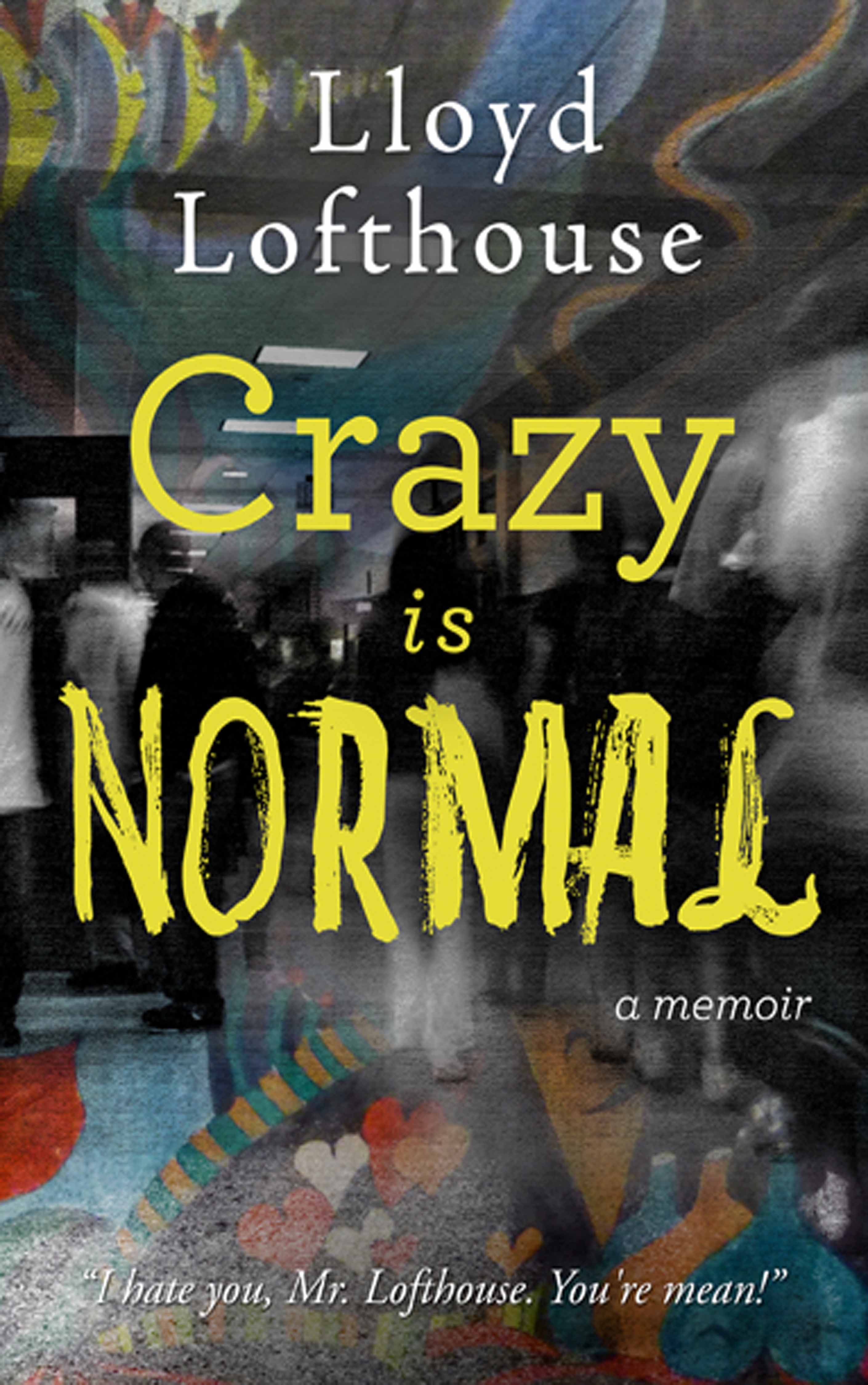
His third book is Crazy is Normal, a classroom exposé, a memoir. “Lofthouse presents us with grungy classrooms, kids who don’t want to be in school, and the consequences of growing up in a hardscrabble world. While some parents support his efforts, many sabotage them—and isolated administrators make the work of Lofthouse and his peers even more difficult.” – Bruce Reeves
Lofthouse’s first novel was the award winning historical fiction My Splendid Concubine [3rd edition]. His second novel was the award winning thriller Running with the Enemy. His short story A Night at the “Well of Purity” was named a finalist of the 2007 Chicago Literary Awards. His wife is Anchee Min, the international, best-selling, award winning author of Red Azalea, a New York Times Notable Book of the Year (1992).
To follow this Blog via E-mail see upper right-hand column and click on “Sign me up!”
Twenty five years ago, when charters were a brand-new idea, advocates said they would cost less and get better results than public schools. Now, however, charter schools are suing for equal funding. The Arizona appellate court just ruled that the state is not obliged to provide equal funding to charter schools and public schools.
The Education Law Center reports:
AZ COURT RULES STATE CAN FUND CHARTER SCHOOLS LOWER THAN PUBLIC SCHOOLS
At the beginning of the charter school experiment, charter school advocates touted their ability to provide a superior education at a lower cost than traditional public schools. Now, we are seeing the charter lobby abandon that claim and turn to the courts to demand equal funding for charter schools. In Texas, charter school advocates recently lost their claim for equal funding. In New York, charter school advocates have sued for equal facilities funding. In a ruling that may have…
David Tyack and Larry Cuban, two of America’s most accomplished scholars in education, published the book “Tinkering Toward Utopia: A Century of Public School Reform” (1995) examining various efforts to reform American education and explaining why schools tend to persist regardless of changes envisioned by reformers. The book, arguably one of the best treatises on the subject in the past two decades, opens by noting how it is possible to portray American education as either evidence of progress or of regress depending almost entirely upon the motivations of the examiner:
Beliefs in progress or regress always convey a political message. Opinions about advance or decline in education reflect general confidence in American institutions. Faith in the nation and its institutions was far higher in the aftermath of success in World War II than in the skeptical era of the Vietnam War and Watergate. Expectations about education change, as do media…
In a new blog post Gene V. Glass, who, earlier this year with David Berliner published the excellent 50 Myths & Lies That Threaten America’s Public Schools, recently posted, Are Charter Schools Greenhouses for Innovation and Creativity? Glass declares: “The rationale for the charter school movement went something like this: ‘Public education is being crushed by bureaucratic regulation and strangled by teacher unions. There is no room left for creative innovation; and tired, old traditional educators have run out of energy and ideas. Let free choice reign!’ It sounded good, especially to people who were clueless about how schools actually run. How have things actually worked out? What new, revolutionary ideas have come out of the charter school movement that can teach us all about how to better educate the nation’s children?” Glass describes the conclusion in his and Berliner’s new book: “that in our opinion the vast…
Maybe the blind obedience that gave power to dictators like Hitler had something to do with that change in Western thought about public education, but today, with the emphasis on the Common Core State Standards and harsh punishment of children and teachers who don’t measure up, the United States may be returning to the harsher Aristotelian, Prussian Model of education to brainwash children so they grow up and give blind obedience to their leaders.
To understand the Chinese mind, we should start with Confucius (552 – 479 BC), who is arguably the most influential person in Chinese history and by extension the rest of East Asia: Korea, Japan, the Philippines, and Southeast Asia—thanks to China being a regional super power for more than two thousand years, while its merchants helped spread Chinese cultural influence and thought to the other East Asian countries they traded with.
An important Confucian influence on Chinese society and the rest of East Asia was his focus on education and scholarship, and it’s no secret that Chinese (and other Asian) students put in more hours in classroom study today than their Western counterparts—even in the United States.
In fact, we can measure the influence of Confucius on Asian-American students in the United States. For instance, in 2012, The Washington Post reported, “Researchers found that (high school) graduation rates vary…
David Brennan, Akron industrialist, operates Ohio’s largest charter chain. Most are low-performing. But Brennan donates generously to key politicians, and his schools are rewarded, not closed down.
Bill Phillis of Ohio Coalition for Equity and Adequacy writes:
“Brennan strikes again: More money proposed for the drop-out recovery schools
The billion dollar charter school operator, David Brennan, is about to get a huge early Christmas gift. His charter school empire includes dropout recovery charter schools. One of his dropout recovery charter schools graduated 2 out of 155 students in four years. A provision in HB 343, which is currently sailing through the House, will allow drop-out recovery charter schools to enroll students up to 29 years old for GED or diploma programs at a cost of $5,000 per student.
This provision in HB 343 exacerbates the transfer of tax money to private hands. For decades, Ohio public schools have provided adult…




 Crazy Normal - the Classroom Exposé