David Tyack and Larry Cuban, two of America’s most accomplished scholars in education, published the book “Tinkering Toward Utopia: A Century of Public School Reform” (1995) examining various efforts to reform American education and explaining why schools tend to persist regardless of changes envisioned by reformers. The book, arguably one of the best treatises on the subject in the past two decades, opens by noting how it is possible to portray American education as either evidence of progress or of regress depending almost entirely upon the motivations of the examiner:
Beliefs in progress or regress always convey a political message. Opinions about advance or decline in education reflect general confidence in American institutions. Faith in the nation and its institutions was far higher in the aftermath of success in World War II than in the skeptical era of the Vietnam War and Watergate. Expectations about education change, as do media…
In a new blog post Gene V. Glass, who, earlier this year with David Berliner published the excellent 50 Myths & Lies That Threaten America’s Public Schools, recently posted, Are Charter Schools Greenhouses for Innovation and Creativity? Glass declares: “The rationale for the charter school movement went something like this: ‘Public education is being crushed by bureaucratic regulation and strangled by teacher unions. There is no room left for creative innovation; and tired, old traditional educators have run out of energy and ideas. Let free choice reign!’ It sounded good, especially to people who were clueless about how schools actually run. How have things actually worked out? What new, revolutionary ideas have come out of the charter school movement that can teach us all about how to better educate the nation’s children?” Glass describes the conclusion in his and Berliner’s new book: “that in our opinion the vast…
Maybe the blind obedience that gave power to dictators like Hitler had something to do with that change in Western thought about public education, but today, with the emphasis on the Common Core State Standards and harsh punishment of children and teachers who don’t measure up, the United States may be returning to the harsher Aristotelian, Prussian Model of education to brainwash children so they grow up and give blind obedience to their leaders.
To understand the Chinese mind, we should start with Confucius (552 – 479 BC), who is arguably the most influential person in Chinese history and by extension the rest of East Asia: Korea, Japan, the Philippines, and Southeast Asia—thanks to China being a regional super power for more than two thousand years, while its merchants helped spread Chinese cultural influence and thought to the other East Asian countries they traded with.
An important Confucian influence on Chinese society and the rest of East Asia was his focus on education and scholarship, and it’s no secret that Chinese (and other Asian) students put in more hours in classroom study today than their Western counterparts—even in the United States.
In fact, we can measure the influence of Confucius on Asian-American students in the United States. For instance, in 2012, The Washington Post reported, “Researchers found that (high school) graduation rates vary…
David Brennan, Akron industrialist, operates Ohio’s largest charter chain. Most are low-performing. But Brennan donates generously to key politicians, and his schools are rewarded, not closed down.
Bill Phillis of Ohio Coalition for Equity and Adequacy writes:
“Brennan strikes again: More money proposed for the drop-out recovery schools
The billion dollar charter school operator, David Brennan, is about to get a huge early Christmas gift. His charter school empire includes dropout recovery charter schools. One of his dropout recovery charter schools graduated 2 out of 155 students in four years. A provision in HB 343, which is currently sailing through the House, will allow drop-out recovery charter schools to enroll students up to 29 years old for GED or diploma programs at a cost of $5,000 per student.
This provision in HB 343 exacerbates the transfer of tax money to private hands. For decades, Ohio public schools have provided adult…
A report by the Lawyers Committee for Civil Rights and Economic Justice finds that charter schools in Boston suspend students at much higher rates than public schools.
“Of the 10 school systems in Massachusetts with the highest out-of-school suspension rates, all but one were charter schools and nearly all of them were in Boston, according to the report, which examined the rates for the 2012-2013 school year. The report was released by the Lawyers’ Committee for Civil Rights and Economic Justice, a nonpartisan legal organization in Boston.”
“Roxbury Preparatory Charter School in Boston was by far the most apt to suspend, subjecting nearly 60 percent of its students to out-of-school suspensions during the 2012-2013 school year. City on a Hill Charter School in Boston came in second with a rate of 41percent; followed by the now-closed Spirit of Knowledge Charter School in Worcester with 27 percent, and UP Academy Boston…
President Barack Obama pretends to be a friend of public education, but it just is not so. Sure, the White House offers a decorative promotional on K12 education; however, if one reads it closely, one sees that the Obama administration believes education (and, by extension, those educated) should serve the economy; that “higher standards and better assessments” and “turning around our lowest achieving schools” is No Child Left Behind (NCLB) leftover casserole, and that “keeping teachers in the classroom” can only elicit prolonged stares from those of us who know better.
All of these anti-public-education truths noted, the deeper story in what the Obama administration values regarding American education lay in its selection of US Department of Education (USDOE) appointees. Their backgrounds tell the story, and it isn’t a good one for the public school student, the community school and the career K12 teacher.
Another example of how the corporate supported education reformers will cherry-pick data, spy on children long after they graduate from high school, and DELIBERATELY LIE to achieve their agenda to destroy the public schools, and this is just in one state, New York—-it’s happening in every state!.
Read “Big Brother and His Holding Company- John King and The New York State Education Department: Manipulating Student Information to Drive Agendas” @ Staying Strong in School.
Corporate controlled, Common Core supporter and public education reformer State Education Commissioner John King is verbally spanked in a PTA presentation in New York State.
If the damage to public education in the United States caused by the profit-driven, corporate supported war on the public schools were added up in dollars and damaged lives, how much would that equal?
And if we were to compare that amount to the cost of the wars in the Middle East in the West’s fight against Islamic fundamentalist extremist terrorism with Al Qaeda and ISIS, how would that compare?
Once we have those numbers boiled down to solid figures with dollar signs, we then have the evidence that provides proof that the corporate war on public education is an act of terror close to or equal to the world war on Islamic terrorism.
Both wars—the one against the public schools and the one against Islamic terrorists—destroy lives and damage the economy, but corporations always win and profit. It doesn’t matter if the corporation supplies the tests for the Common Core agenda that ranks and yanks teachers and closes public schools or makes bombs and drones, because someone loses or profits.
When those passenger jets hit the World Trade Center in September 2001, The New York Times reported that the losses caused by 9/11 were about $3.3 Trillion, but someone profited from that attack—the corporations that rebuilt the World Trade Center and the corporations that make the weapons and bombs used in the ongoing war on terror. The money spent to fight the war against terror doesn’t vanish down a rabbit hole.
If you want to know some of the faces behind the corporate economic war of terror on public education, it’s easy—follow the money.
“Hundreds of private philanthropies together spend almost $4 billion annually to support or transform K–12 education, most of it directed to schools that serve low-income children (only religious organizations receive more money). But three funders—the Bill and Melinda Gates Foundation, the Eli and Edythe Broad (rhymes with road) Foundation, and the Walton Family Foundation—working in sync, command the field.” Dissent Magazine.org
Billions are being spent annually to fund the war on the U.S. public schools. Does this mean the billionaires in expensive suits who are funding this war against our children and public school teachers think of these innocents as terrorists to be targeted and destroyed?
The equation is simple—terrorists often target innocent people. it doesn’t matter if the terrorist comes dressed in a suit or they are dressed in black with a mask hiding their face while wearing a keffiyeh on their head before they behead an innocent victim.
_______________________
Lloyd Lofthouse is a former U.S. Marine and Vietnam Veteran,
who taught in the public schools for thirty years (1975 – 2005).
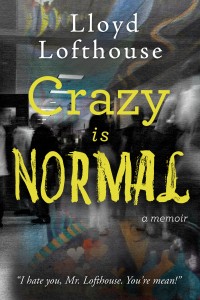
His third book is Crazy is Normal, a classroom exposé, a memoir. “Lofthouse presents us with grungy classrooms, kids who don’t want to be in school, and the consequences of growing up in a hardscrabble world. While some parents support his efforts, many sabotage them—and isolated administrators make the work of Lofthouse and his peers even more difficult.” – Bruce Reeves
Lofthouse’s first novel was the award winning historical fiction My Splendid Concubine [3rd edition]. His second novel was the award winning thriller Running with the Enemy. His short story A Night at the “Well of Purity” was named a finalist of the 2007 Chicago Literary Awards. His wife is Anchee Min, the international, best-selling, award winning author of Red Azalea, a New York Times Notable Book of the Year (1992).
To follow this Blog via E-mail see upper right-hand column and click on “Sign me up!”
The term social promotion has been misused by the corporate supported, fake, public-education reform movement to fool as many people as possible—the same as they have misused the meaning of teacher tenure.
There is no such thing as social promotion in most if not all of the U.S. public schools that leads to an automatic high school (HS) graduation by age 17/18. To think that social promotion in the public schools moves children along as if they were parts on an assembly line is as foolish as thinking that public school teachers have total job protection through tenure and cannot lose their jobs for any reason—of course teachers can be fired. All a school district has to do is prove that the claims of incompetence are true through due process, and due process cases in court against teachers take place annually across America in every state and some are successful.
Social promotion does not mean the student will earn a HS degree, and the system that appears to move children along as if they were on an assembly line was not created by teachers—it was created by legislation and/or public pressure through political correctness such as the parent self-esteem movement that swept the nation for several decades and is still a formidable force. Parents who don’t want their child’s self-esteem to suffer will fight to keep the child moving along with their peers.
But, social promotion doesn’t always mean the child, who falls behind in reading and/or math, is neglected and ignored as they move along from grade to grade.
Most if not all public schools have interventions as long as they have the funding to support those interventions.
The law makes education mandatory from age 5/6 to 17/18, but it doesn’t—until Bill Gates and Obama’s Common Core State Standards interfered with the process—control what the schools can do to re-mediate a child who is falling behind.
For instance, in the district where I taught for thirty years, children who fell behind in reading were assigned to reading labs in lieu of electives. If the child continued to fall behind, they might be assigned to two sections of a reading lab. The reading labs usually had 20-25 students with a teacher and an adult assistant. Children who were reading close to, on, or above grade level would not be scheduled into a reading lab. Reading specialists and reading labs may be found in most elementary, middle and high schools as long as the money is there to fund these resources.
The district where I taught also offered after school tutoring—for the children who needed it most—and parents and students were counseled and advised to attend, but after mandatory school hours, attending the tutoring, night classes or summer school classes was voluntary and many of these children, who needed this remedial help the most, didn’t take advantage of what was offered, and that was usually due to lack of parent support.
For children with special needs, there was also special education classes with teachers who were trained specialists certificated in that area, and individualized instruction was offered for each of these students. The special education teachers worked with the mainstream classroom teachers in other subjects to create individualized plans that would focus on improving the areas where these children needed the most help.
For most of the years I taught, I also taught summer school to children who needed to make up classes they had failed or to improve their reading skills. Summer school was not mandatory, and for that reason, on the first day of summer school, my class loads would start out with 50 – 60 students, but by the end of the first week, that number would be cut in half as students decided to leave and not return. By the end of summer school, it was common to have less than twenty students and closer to ten in a class.
Social promotion does not equal an automatic HS graduation. Students must still pass the required classes, earn the required number of credits/units and, in about half of the states including California where I taught, pass a competency exam that indicates the student has the minimum skills in English, math and maybe science to qualify for HS graduation. In California, students who failed all or a portion of the competency exam as early as tenth grade would be encouraged to enroll in summer school classes designed to help the student to catch up and pass the competency exam before on-time graduation at age 17/18.
If students, for instance, failed 9th grade English, they would still move on to 10th grade English the next year, but counselors would advise the students to catch up in the summer by taking the 9th grade English class a second or third time, or to take night classes at the local community college to make up any failed classes that were required for HS graduation.
Every year at the high school where I taught for the last 16 years of my 30 year teaching career, there were always seniors who reached the 12th grade deficient in units, and it was up to them to retake the classes they had failed before graduation in June. Those who did not were told they could finish high school late by taking classes at the local community college.
This explains why the on-time HS graduation rate is about 80%, but by age twenty-five, 90% of Americans have earned a HS degree or its equivalent. And the 10% (about 24 million) of adult Americans that never earned a HS degree or its equivalent, well, it was their choice not to take advantage of every effort that was offered to them every step of the way.
In the United States, it is mandatory that a child stay in school to age 18 (it’s possible to drop out at 16 with permission), but, for a number of reasons, it would be wrong to keep a child in grade school until they turned 18 just because they were reading below grade level and made little or no effort to catch up. I’m sure most parents wouldn’t want their six-year old in the same classroom sitting next to a hormonal raging sixteen year old, who, for whatever reason, just didn’t qualify to move on according to some test.
_______________________
Lloyd Lofthouse is a former U.S. Marine and Vietnam Veteran,
who taught in the public schools for thirty years (1975 – 2005).
His third book is Crazy is Normal, a classroom exposé, a memoir. “Lofthouse presents us with grungy classrooms, kids who don’t want to be in school, and the consequences of growing up in a hardscrabble world. While some parents support his efforts, many sabotage them—and isolated administrators make the work of Lofthouse and his peers even more difficult.” – Bruce Reeves
Lofthouse’s first novel was the award winning historical fiction My Splendid Concubine [3rd edition]. His second novel was the award winning thriller Running with the Enemy. His short story A Night at the “Well of Purity” was named a finalist of the 2007 Chicago Literary Awards. His wife is Anchee Min, the international, best-selling, award winning author of Red Azalea, a New York Times Notable Book of the Year (1992).
To follow this Blog via E-mail see upper right-hand column and click on “Sign me up!”
These proven paths to healthy brain development are blocked by Obama’s education policies, the most pernicious of which is the overemphasis on standardized tests.
This is a terrific article by civil rights attorney Wendy Lecker about the madness of our nation’s obsession with standardized testing.
She writes:
Last year, President Barack Obama committed hundreds of millions of dollars to brain research, stressing the importance of discovering how people think, learn and remember. Given the priority President Obama places on the brain in scientific research, it is sadly ironic that his education policies ignore what science says is good for children’s brains.
It is well known that play is vital in the early grades. Through play, kindergarteners develop their executive function and deepen their understanding of language. These are the cornerstones of successful reading and learning later on.
At-risk children often arrive at school having heard fewer words than more advantaged children. This deficit puts at-risk children behind others in learning to read. Scientists at Northwestern have recently shown that music training in the early…


 Crazy Normal - the Classroom Exposé